Inside the Ten Most Watched Senate Races
From coastal Maine to the plains of Kansas, voters decide the fate of key seats in a tightly contested midterm cycle.
By Harper Laurent ·

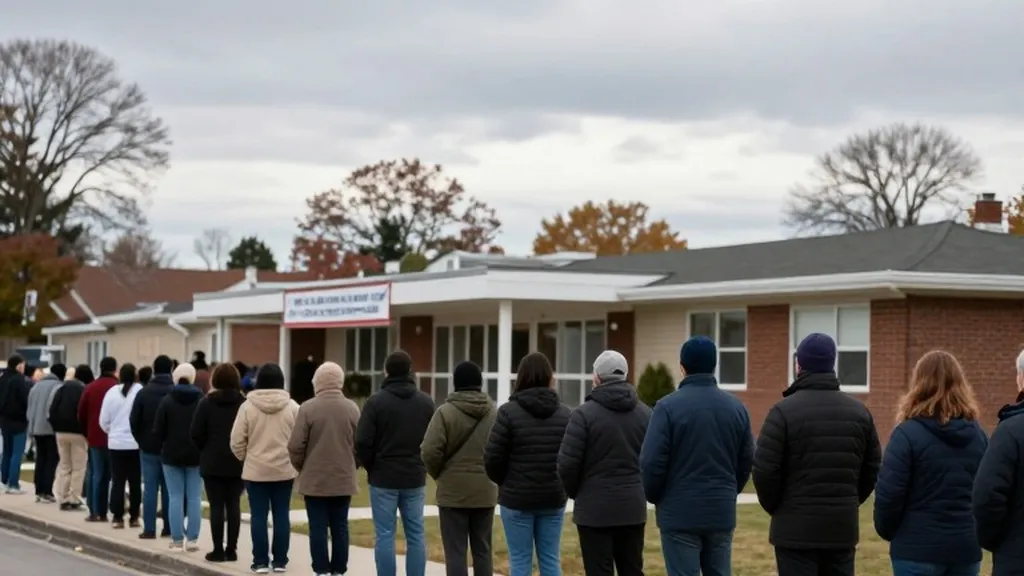
It is Election Day, Tuesday, November 3, 2026, and attention turns to ten specific Senate races that could determine the balance of power in Washington. These contests span a wide geographic and political spectrum, including North Carolina, Georgia, Ohio, Michigan, Texas, Maine, New Hampshire, Minnesota, Kansas, and Alaska. The outcome of these elections will shape the legislative landscape for President Donald Trump’s final two years in office. The day is a referendum on the president’s second term, with many voters expressing frustration over high prices and the ongoing war with Iran.
In North Carolina, the race is open following the retirement of Republican Senator Thom Tillis. Democratic former Governor Roy Cooper faces former Republican National Committee chair Michael Whatley. The state voted for Trump by a margin of 3.3 points in 2024, making it a critical battleground. In Georgia, Democratic Senator Jon Ossoff defends his seat against Republican Representative Mike Collins. Georgia is rated a lean to likely Democratic race, with the 2024 presidential margin showing Trump ahead by 2.2 points. Both races highlight the shifting dynamics in the South, where Democrats are attempting to hold ground in states that have traditionally favored Republicans.
The Midwest presents its own set of high-stakes matchups. In Ohio, Democratic former Senator Sherrod Brown challenges Republican Senator Jon Husted in a special election. Ohio voted for Trump by 11.2 points in 2024, yet the race remains competitive due to the high profile of the candidates. In Michigan, Republican former Representative Mike Rogers faces Democrat Abdul El-Sayed in an open seat left by retiring Senator Gary Peters. The state is rated a toss-up to lean Democratic, and the race was further complicated when El-Sayed’s former primary opponent, Haley Stevens, endorsed Rogers on Sunday. Michigan’s 2024 presidential margin was just 1.4 points for Trump, indicating a closely divided electorate.
Texas features a contest between Republican Attorney General Ken Paxton and Democrat James Talarico. The Associated Press notes that President Trump backed Paxton over incumbent Senator John Cornyn during the primary. Texas is a large state with a 2024 presidential margin of 13.6 points for Trump, but the race is considered significant due to the state’s population and political influence. In Maine, Republican Senator Susan Collins runs for re-election against Democratic former state Senate President Troy Jackson. Maine is the only state in the list where Harris won in 2024, with a margin of 6.9 points. The Associated Press notes that economic strain and tariffs have made the state particularly competitive, with all four major ratings groups labeling it a toss-up.
New Hampshire sees an open seat race following the retirement of Democratic Senator Jeanne Shaheen. Democratic Representative Chris Pappas faces former Republican Senator John E. Sununu. The state voted for Harris by 2.8 points in 2024, and the race is viewed as a key indicator of voter sentiment in the Northeast. In Minnesota, the seat of retiring Democratic Senator Tina Smith is up for grabs. Democratic Lieutenant Governor Peggy Flanagan and Republican Michele Tafoya, a former sports broadcaster, are among four candidates in the race. Minnesota is a traditionally competitive state, and the outcome will likely depend on voter turnout in rural and suburban areas.
Kansas has emerged as a central fight for Senate control, despite being a reliably Republican state. The race is rated a toss-up to lean Republican, with the 2024 presidential margin showing Trump ahead by 16.2 points. The Associated Press notes that Kansas has become a focal point for both parties, as it represents a chance to break the trend of the president’s party losing seats in midterm elections. In Alaska, the race is unique due to a lawsuit filed by the Trump administration regarding the certification of the Senate result. The state is rated a toss-up to lean Democratic, with a 2024 presidential margin of 13.1 points for Trump. The legal challenges add a layer of complexity to the administration of the election in this remote state.
Polls are open across all ten states, with varying hours depending on local regulations. In North Carolina, polls are open from 6:30 a.m. To 7:30 p.m. Local time. In Georgia, they are open from 7 a.m. To 7 p.m. Ohio polls open at 6:30 a.m. And close at 7:30 p.m. Michigan polls are open from 7 a.m. To 8 p.m. Texas polls open at 7 a.m. And close at 7 p.m. Maine polls are open from 6 a.m. To 8 p.m., though small towns may open later. New Hampshire poll hours vary by town, with polls opening by 11 a.m. And closing no earlier than 7 p.m. Minnesota polls are open from 7 a.m. To 8 p.m. Kansas polls are open from 7 a.m. To 7 p.m. Central Time. Alaska polls are open from 7 a.m. To 8 p.m.
Voter sentiment is a critical factor in these races. 35% of U.S. Adults approve of President Trump’s job performance, while 25% approve of his handling of the economy. About seven in 10 Americans say the country is heading in the wrong direction. In North Carolina, voter James Moore, a 57-year-old librarian in Raleigh, stated that he is paying more for taxes, healthcare, and everyday items. In Florida, voter Mark Barker of Palm Beach Gardens said he has been following Trump closely and believes he is doing an awesome job. These individual perspectives reflect the broader national debate over the direction of the country and the performance of the current administration.