2026 Election Spending Hits Record Highs With Party Level Splits
While Republican committees outspent Democrats, candidates on the Democratic side raised more funds, creating a unique financial dynamic in the most costly election on record.
By Malik Salazar ·

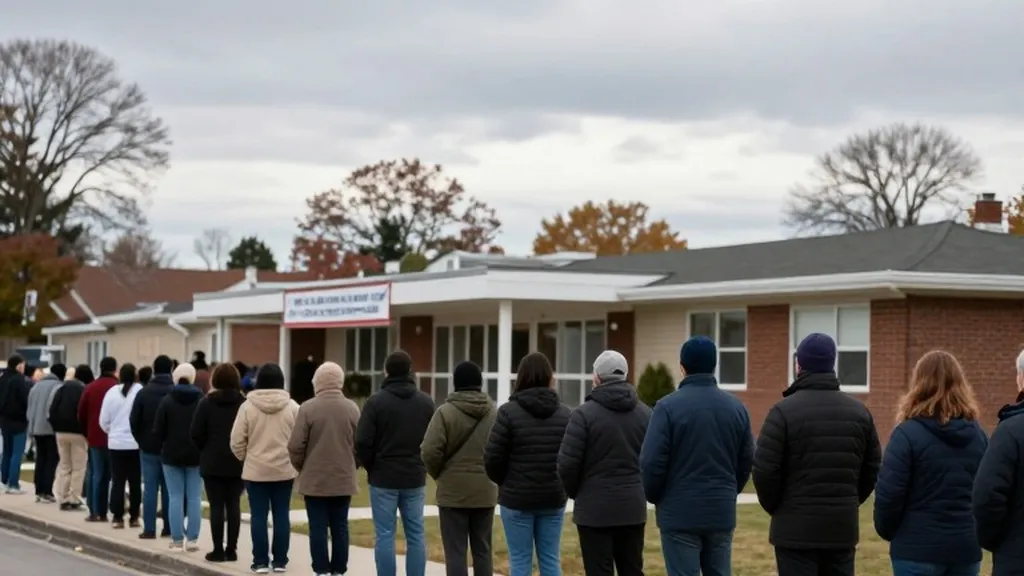
The 2026 midterm elections are shaping up to be the most expensive in American history, a trend that underscores the intense financial resources both parties are deploying to control Congress. As polling stations open across the nation, the sheer volume of money spent on this cycle has drawn significant attention from analysts and voters alike. The Associated Press has noted that the total expenditure is likely to surpass all previous records, reflecting the high stakes involved in deciding who will hold power in the House and Senate.
A distinct financial split has emerged between the committee level and the candidate level of the race. At the committee level, Republican organizations have significantly outraised and outspent their Democratic counterparts. This advantage has been bolstered by substantial contributions from Trump affiliated groups and the influence of billionaire Elon Musk. These entities have provided a financial cushion that allowed Republican committees to dominate the airwaves and digital advertising spaces throughout the campaign season.
However, the picture changes when looking at individual candidates. At the candidate level, Democrats have outraised their Republican opponents. This suggests that while the party machines have different bank accounts, the individual races for seats in the House and Senate have seen a different flow of money. This divergence highlights how funds are being allocated differently depending on the specific strategy of each party in this critical halfway point of the second Trump term.
The allocation of advertising dollars reveals a strategic focus for the Republican side. An analysis by the Associated Press of AdImpact data shows that 88.1 percent of Republican general election television ad spending went to states and districts that Donald Trump won in the 2024 presidential election. This indicates a strong effort to consolidate support in areas where the party has a historical advantage, rather than spreading resources thinly across all potential battlegrounds.
Within that 88.1 percent, a significant portion of the spending, amounting to more than 850 million dollars, was directed at areas where Trump won by 10 points or more. This massive infusion of capital into solidly Republican territory suggests a belief that high visibility and frequent messaging are essential to maintaining turnout and enthusiasm in those regions. It contrasts with the typical midterm strategy of focusing heavily on tight races, though the Republican leadership has been bracing for a potential loss of the House.
Democrats, meanwhile, have adopted a cautious optimism regarding their financial position at the candidate level. Their strategy appears to rely on the strength of individual campaigns rather than the broader committee war chest. This approach may be driven by the need to defend their current seats in the House and Senate, where they hold fewer seats than the Republicans. The Democratic Party is fighting to hold the Senate while hoping to flip the House, a goal that requires precise targeting of resources in competitive districts.
The financial dynamics are set against a backdrop of voter sentiment that the Associated Press describes as a struggle with high prices and anger over an unpopular war with Iran. Polling from the AP and NORC indicates that 35 percent of U.S. adults approve of Trump's job performance, while only 25 percent approve of his handling of the economy. About 7 in 10 respondents say the country is heading in the wrong direction, a sentiment that candidates on both sides are trying to address with their respective messaging budgets.
Republican National Committee Chairman Joe Gruters emphasized the importance of turnout in his recent statements, noting that everything depends on getting voters to the polls. He stated that if the party turns out its voters, they will win, a plan they have been preparing for. This focus on turnout aligns with the massive spending in Republican-leaning areas, aiming to solidify the base and ensure that the financial investment translates into actual votes on election day.
In contrast, Democratic Congressional Campaign Committee Chair Suzan DelBene pointed to the anger of the American people as a driving force for her party. She stated that the public wants change, a message that resonates with voters who are concerned about the cost of living. This narrative is being supported by the candidate level fundraising efforts, which have allowed Democratic candidates to compete effectively in their specific districts despite the committee level spending gap.
The financial intensity of this election is also influencing the broader political landscape. If Democrats win even one chamber, investigations and possible impeachment proceedings become likely, a prospect that both parties are factoring into their spending strategies. The House Democratic Leader, Hakeem Jeffries, would be the first Black speaker if his party takes control, and he has outlined a 100 day agenda focused on the cost of living and oversight. This high stake environment has likely contributed to the record breaking levels of fundraising and spending seen in the 2026 cycle.
As voters head to the polls, the interplay between committee level dominance and candidate level competitiveness will be a key factor in determining the outcome. The 850 million dollars spent in heavily Republican areas and the overall record setting costs reflect a party confident in its base but aware of the challenges ahead. For Democrats, the ability to raise more at the candidate level offers a path to victory that does not rely solely on the party's overall financial strength, making this election a complex test of both strategy and voter turnout.