Midterm Maps: New Districts in Seven States May Not Match Vote Totals
Redistricting in key states created districts that diverge from local voting patterns, complicating the Democrats' post-election strategy.
By Malik Salazar ·

The November 3, 2026 midterm elections resulted in a significant shift in power, with Democrats securing majorities in both the U.S. House and Senate. According to Ballotpedia, Democrats picked up at least 43 House seats and seven Senate seats, all of which had been held by Republicans. As of November 6, 2026, Democrats held a 250 to 157 majority in the House and a 54 to 44 majority in the Senate. This outcome marked a wave election for the Senate, placing the Republican seat loss in the top 20 percent of historical elections against a president’s party. However, the House loss of 42 seats fell short of the 48-seat threshold typically required to classify a midterms result as a wave, leaving the precise magnitude of the shift subject to final tallies in uncalled races.
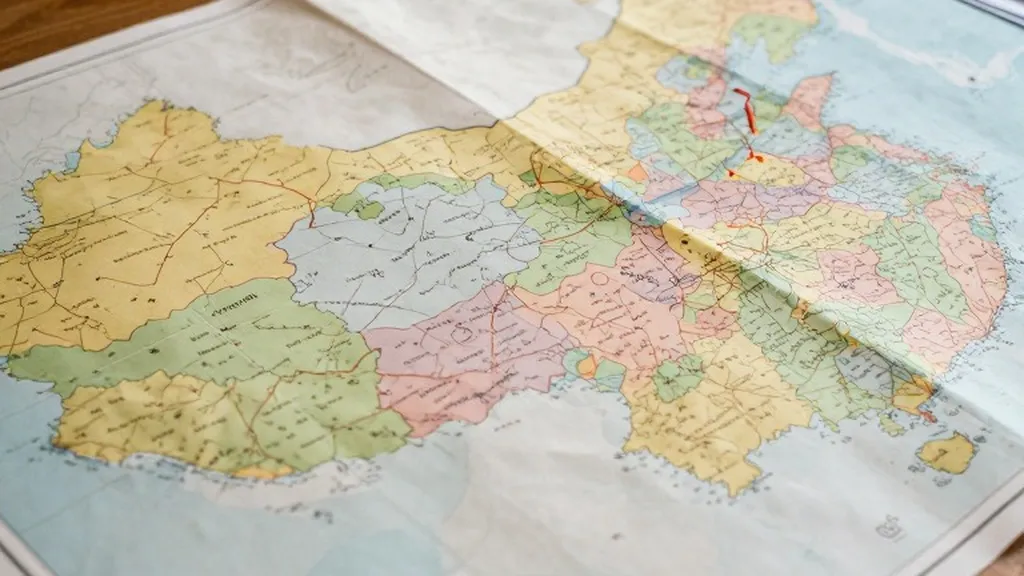
The new congressional maps in California, Florida, Missouri, North Carolina, Tennessee, Texas, and Ohio played a central role in shaping these results. These states underwent redistricting cycles that altered district boundaries, often drawing lines that grouped voters in ways that did not strictly mirror local election outcomes. In several of these states, the maps created districts that appeared to favor one party based on geographic concentration, yet the actual vote totals suggested a different reality on the ground. This discrepancy has led to discussions about whether the maps will perform as predicted in the coming two years or if they will prove more volatile than anticipated.
In California, the rejection of Proposition 40, a tax on the net worth of billionaires, highlighted the complex dynamics of the state’s new districts. The Associated Press reported that the measure failed, with the no side raising roughly ten times as much as the yes side. Google co-founder Sergey Brin alone contributed more than $100 million to a political action committee opposing the tax. The AP Voter Poll indicated that a majority of voters under 30 supported the measure, while roughly seven in 10 voters aged 65 and older opposed it. This generational and economic divide suggests that the new California districts may produce results that vary significantly by age and income, potentially challenging the assumptions made during the redistricting process.
Florida and Texas, two large states with substantial populations, also saw their maps influence the national tally. In these states, the redistricting efforts aimed to solidify partisan advantages in certain areas, but the 2026 results showed a strong Democratic performance in both chambers. The net loss of seats for Republicans in these states contributed to their overall decline. The maps in these regions often split metropolitan areas from surrounding suburbs, a strategy that can lead to unpredictable outcomes if voter behavior shifts or if turnout patterns change in specific precincts. The new districts may not align with the historical voting trends that informed their creation, leading to a situation where the party in power must navigate a more fragmented landscape.
Missouri and North Carolina represent another group of states where the new maps are being scrutinized. In these states, the redistricting lines were drawn with an eye toward maximizing partisan control, yet the 2026 election results showed a competitive environment. Democrats gained ground in these states, contributing to their overall majority. The maps in Missouri and North Carolina often included rural areas that traditionally lean Republican, but they also included urban centers that favored Democrats. The interplay between these areas resulted in a mixed outcome, with some districts flipping parties and others remaining stable. This volatility suggests that the maps may not produce the consistent partisan advantage that was intended at the time of their approval.
Tennessee and Ohio rounded out the group of seven states with new congressional maps. In Tennessee, the redistricting process focused on balancing urban and rural interests, creating districts that were designed to be competitive. The 2026 results reflected this competitiveness, with Democrats making gains that contributed to their national victory. In Ohio, the maps were drawn with a similar focus on geographic diversity, but the election results showed a stronger Democratic performance than some analysts had predicted. The new districts in both states may prove to be key battlegrounds in the 2028 cycle, as they offer opportunities for both parties to expand their bases. The fact that these districts did not vote exactly as drawn during the 2026 midterms indicates that voter behavior is more fluid than the static boundaries of the maps suggest.
The implications of these new maps extend beyond the immediate 2026 results. As the Democrats prepare to govern, they must consider how these districts will behave in future elections. The maps in these seven states may create a dynamic where the party in power faces constant challenges from the opposition, particularly in districts where the margin of victory was narrow. This could lead to a more defensive legislative strategy, with both parties focusing on key districts that could swing in either direction. The fact that the maps did not produce the expected partisan alignment in 2026 suggests that voter preferences are evolving in ways that may not be fully captured by the current district boundaries.
The leadership changes in Congress also reflect the impact of the new maps. House Republicans selected Jim Jordan of Ohio as their new minority leader, defeating Steve Scalise of Louisiana in a 106 to 73 vote. Jordan, who serves as chairman of the House Judiciary Committee, emphasized his experience in committee hearings and his ability to oversee the administration. His selection signals a shift toward a more aggressive approach in the minority, with a focus on investigations and oversight. In the Senate, John Thune of South Dakota is expected to remain as the Republican leader, despite calls from some colleagues for a change. Thune’s retention suggests that the Republican caucus is looking for stability as it navigates its new role in the minority, but the underlying tension over the party’s direction remains evident.