
Anthropic Targets Reliable Problem Detection by 2027
The field has published a schedule for understanding its own machines, but the numbers inside remain unread by anyone.
By Sarah Montgomery ·
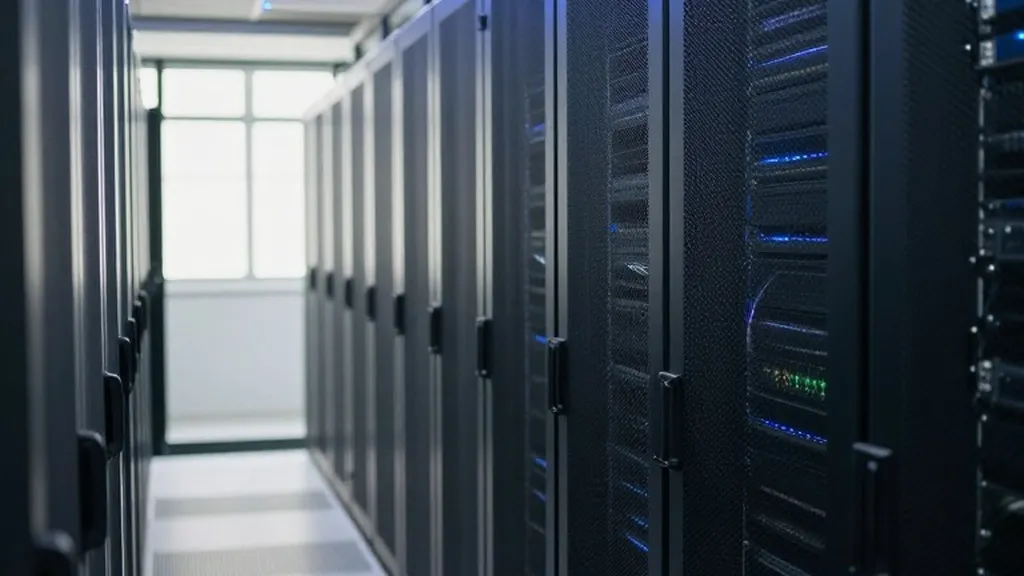
The core issue in modern artificial intelligence is a gap between the complexity of the machines and the ability of their creators to explain them. A trained model is essentially a wall of numbers called parameters, also known as weights. These weights are the only thing the training process leaves behind. They are adjusted upward or downward as the system is rewarded for some outputs and penalised for others. The scale of this structure is the central point of current debate. Nobody reads the trained object. What ships to users is the behaviour, not the internal logic.
The magnitude of the problem is illustrated by a specific release. On July 23, 2024, Meta publicly released Llama 3.1 405B, a model with 405 billion parameters. Meta trained it on more than 15 trillion tokens and called it the largest and most capable openly available foundation model it had released. A token is a chunk of text, roughly part of a word. Reading 405 billion items at one per second takes about 12,800 years. This calculation underscores the reality that the trained artefact itself is not read by anyone, even by the engineers who built it.
The people running the field have acknowledged this opacity publicly. Sam Altman, the head of OpenAI, has said that the field has certainly not solved interpretability, including about his own company's models when asked how they reach an answer. Interpretability is the research field that tries to explain why a trained model produces the answer it produces. At the AI for Good Global Summit in May 2024, an ITU meeting held in Geneva, Altman answered a challenge about machine opacity by pointing at the human mind. He noted that the human mind is not fully understood either, and that what happens in a brain neuron by neuron is not understood. The ITU is a United Nations agency for information technology. Neurons are the nerve cells in a brain.
Dario Amodei, the head of Anthropic, has said that when a generative AI system does something such as summarise a financial document, researchers have no idea at a specific or precise level what happened inside it. Geoffrey Hinton, a researcher often credited with the work behind modern neural networks, has argued publicly that the inside of these systems is not understood and has warned about the risks of the technology. A neural network is the layered arithmetic structure a model is built from. These statements form a consistent record of uncertainty from the top of the industry.
Anthropic has published an essay saying researchers understand too little of the inner workings of leading AI models. The company set a goal of reliably detecting most model problems by 2027. This published answer to the black box issue is a schedule rather than an explanation. It represents the clearest statement that the field expects to be trusted for a few more years on trust, and then perhaps on evidence. The industry is working toward a measurable standard of reliability rather than a complete understanding of the internal code.
The honest position is in between the two camps. The claim that nobody has any idea how any of it works is too strong. Interpretability research is an active field with published results, and the training recipe is documented. Model makers publish training methods, evaluation scores and safety reports. They publish how the numbers were made. They do not publish what any particular number means, because nobody knows. The claim that the systems are understood is weaker still, given the sheer volume of data involved.
The brain comparison that company heads reach for cuts both ways. Human beings are also unreadable at the level of cells, and society has handed hospitals, courts and roads to people anyway. If opacity is the standard, the technology is already qualified. If inspectability is the standard, it is not, and the burden falls on whoever is asking for trust. The practical question is not whether the numbers can be read but what control is warranted while they cannot be.
Robots, drones, laboratories that handle living material, and military use are the cases where an unreadable decision has a physical consequence. A wet lab is a laboratory that handles living material. In these scenarios, the lack of interpretability carries a tangible risk. The record shows that the field is aware of this gap. The published goal by 2027 signals an intent to close that gap with evidence, moving the industry from a state of pure trust to one of verified safety before expanding the scope of autonomous action.