Albanian Police Injure Over 300 in Tirana Unrest
Violent clashes in the capital resulted in widespread injuries and arrests as thousands protested government policies and corruption.
By Harper Laurent ·
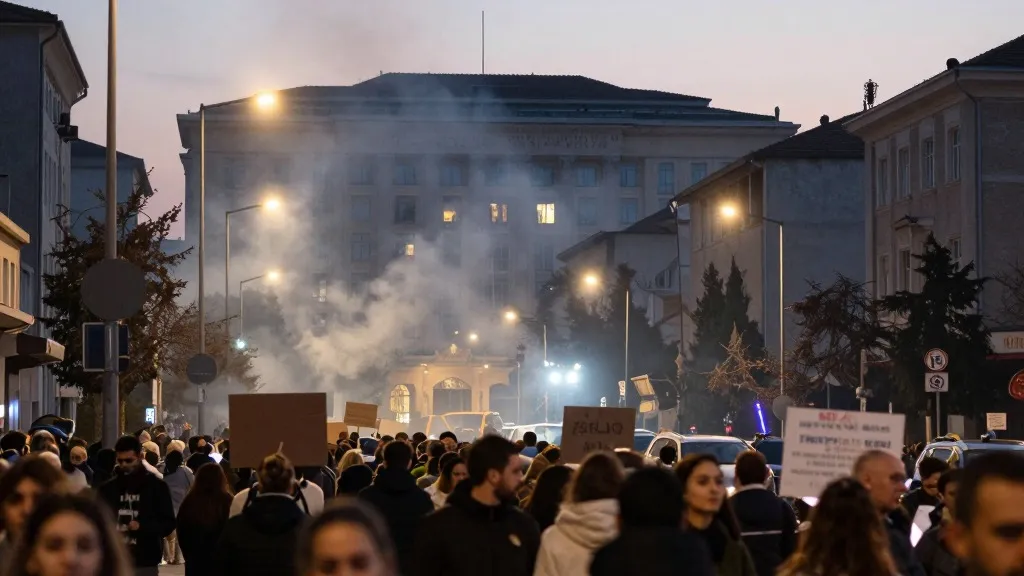
More than 300 people, including both demonstrators and law enforcement officers, were injured during a violent confrontation in Tirana on Saturday. The figure, provided by Albanian authorities, highlights the scale of the physical clashes that erupted when police attempted to disperse a large antigovernment rally. In addition to the injuries, dozens of protesters were taken into custody as the situation escalated in the capital city.
The primary claim of the event is that the government deployed significant force to manage a crowd that had gathered in response to a broader wave of discontent. Police utilized water cannon, tear gas, and rubber bullets to push back the crowds. Several government buildings were targeted by the demonstrators, with specific attacks directed at structures that symbolize state power and administrative authority.
This latest episode of unrest follows a period of heightened tension that began in mid-October. The initial protests were driven by complaints regarding the deteriorating conditions in schools and the rising cost of living in the Balkan nation. Although tensions had appeared to settle in the days leading up to Saturday, the rally marked a sharp return to conflict. Organizers had called upon students and citizens from across the country to join the demonstration, leading to a turnout of thousands.
A diverse coalition of groups supported the rally, indicating that the protest had moved beyond a single issue. University professors, artists, and opposition political parties all announced their backing for the event. In anticipation of the large crowd, local media reported that police increased security measures around the capital. This included conducting checks on vehicles entering the city to monitor the flow of protesters.
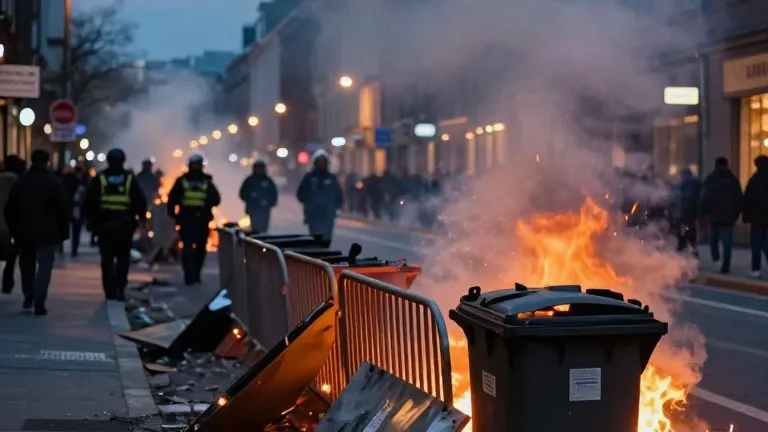
The Ministry of Education building served as a central focal point for the demonstrators' frustration. During the Saturday rally, participants threw stones at the structure and rolled burning waste bins toward the building. These actions underscored the specific grievances regarding the education system that sparked the recent wave of protests in the first place.
The current unrest is part of a longer pattern of antigovernment demonstrations that have occurred intermittently since May. The initial trigger for these protests was the revelation of a luxury hotel project linked to the family of United States President Donald Trump. Since that disclosure, public anger has expanded into a wider campaign against systemic corruption and the high cost of daily life. Protesters have consistently called for the resignation of Prime Minister Edi Rama, who leads the Socialist Party.
Prime Minister Rama has attributed the violence to external influences, blaming foreign actors for stirring up the situation. He specifically accused Russia and Iran of driving online misinformation campaigns to fuel the discontent. Despite this stance, the prime minister has also called for dialogue with the opposition. In a symbolic gesture on Saturday, red cushions were placed outside the government headquarters to invite talks, a move that protesters rejected by setting the cushions on fire.
The demonstrators have broadened their criticism to encompass the entire political class, arguing that the crisis is a systemic failure rather than the fault of one individual. Signs carried by some in the crowd criticized Sali Berisha, the centre-right leader who is Rama's main political rival. This suggests that the public is seeking a new direction beyond the current binary of political leadership.
As the immediate violence subsides, questions remain about the path forward for the government. The use of force has further polarized the population, while the symbolic destruction of the dialogue cushions signals a lack of immediate trust. The government now faces the challenge of addressing the root causes of the protests, including education and economic costs, while managing the ongoing tension with an opposition that has grown more unified and vocal.