Russia cuts regional health budgets
Funding for primary care and cancer treatment drops in 2027 as military spending rises by 27 percent.
By Malik Salazar ·
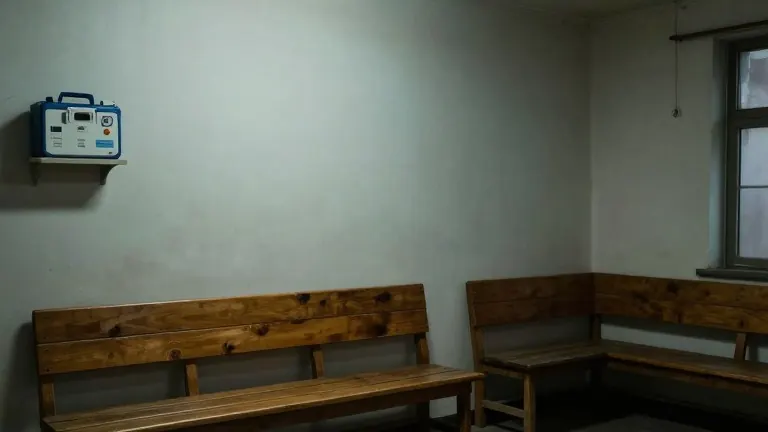
In the village of Grigoryevskoye, northeast of Moscow, an ambulance took 50 minutes to reach a collapsed patient. Vera, the patient's daughter, said no medical staff arrived to help and the clinic lacked basic supplies like adrenaline. Her mother died. The local medical station serves the village, a school, and a kindergarten with only one paramedic. There is no pediatrician.
This scarcity reflects a shift in federal spending. Funding for the Long and Active Life initiative, which covers 11 health programs, will fall from 181 billion rubles in 2026 to 146 billion rubles in 2027. The programs include primary care, cardiovascular and cancer treatment, diabetes management, emergency services, and rehabilitation. Meanwhile, the military budget is set to reach 17.1 trillion rubles in 2027, a 27 percent increase from 2026, driven by the war in Ukraine.
The reduction in federal support is most severe for cancer care. The 2026 allocation was cut from 144.9 billion rubles to 44.9 billion rubles. The draft 2027 budget provides only 3.87 billion rubles. Health Minister Mikhail Murashko told a parliamentary committee on October 15 that most cancer treatment is already financed through compulsory medical insurance, not direct federal grants. He added that 6 billion rubles would be allocated specifically for medicines in 2027.
Residents in other regions report similar gaps. Marina, from the Yaroslavl region, spent 10 hours a day traveling between facilities to collect three-day supplies of morphine for her dying father. Her mother managed diabetes without a nearby endocrinologist. In the Pskov region, a two-year-old boy was turned away by multiple facilities for an eye injury. In Vladimir region, residents protested plans to close routine deliveries at a hospital in Kolchugino, forcing pregnant women to travel 80 kilometers to the city of Vladimir.
Andrei Makarov, chairman of the Budget Committee, cited exhausted quotas and long waits for high-tech treatment during the first reading of the draft budget on October 29. He noted difficulties in transferring patients from remote areas to federal centers. In Krasnoyarsk, the regional health department plans to close two maternity hospitals by mid-January due to declining birth rates and building conditions.
The government states that increased funding for compulsory medical insurance will cover more costs. Murashko said 113 billion rubles are earmarked for regional medicine provision and 285 billion rubles for centralized drug purchases. Patient advocates warn that these shifts may leave gaps in poorer regions where infrastructure is already thin.