Economists Warn Australia Faces French Spending Crisis Without Budget Reform
French fuel prices have risen 36% this year while public debt approaches 120% of GDP, prompting experts to urge Australia to address its own growing liabilities.
By Sarah Montgomery ·
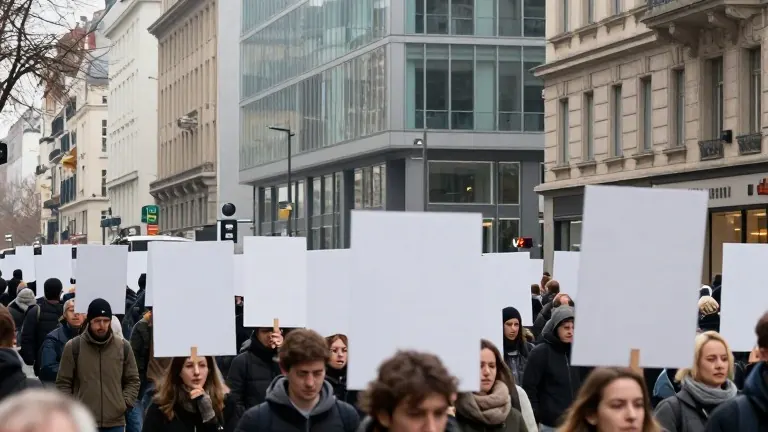
Hundreds of thousands of people marched through cities across France on Saturday to protest underfunded schools and high living costs. The demonstrations, which featured reports of violence and major unrest, have prompted Australian economists to warn that the country faces similar fiscal risks if it fails to address its own budget trajectory.
Luke Hartigan, a senior economics lecturer at the University of Sydney, stated that while no single factor drives the discontent in France, soaring energy costs are a primary driver. Fuel prices in France have increased by 36% this year, a rate of increase three times higher than in Australia. The US and Israel conflict with Iran has further driven up European gas prices as the northern hemisphere enters winter.
Hartigan argued that France's financial position is deteriorating due to its extensive welfare state. He described a binary situation where citizens demand better services and cost-of-living relief, yet the country's fiscal capacity is shrinking. According to International Monetary Fund data, France has not balanced its budget since 1974. Total public debt as a share of the economy has now reached nearly 120%.
In comparison, Australia's total government debt stands at 53% of GDP. However, this figure has risen sharply from 40% a decade ago and from just under 10% two decades ago. Hartigan noted that France's stagnant economy has compounded its debt issues, suggesting that Australia must focus on productivity to avoid a similar decline.
He said, "If you think about trajectories, they give us an idea of where we could potentially be if we continue down this path. It’s a warning signal."
Bob Breunig, director of the Australian National University’s Tax and Transfer Policy Institute, observed a widening gap between voter expectations and government capacity. He noted that the belief that government should solve all problems is more entrenched in Europe than in Australia, though the narrative is failing in both places. French public spending currently accounts for 58% of the economy, compared to 40% in Australia.
Breunig described Australia's 40% spending level as the highest in data dating back to 1990, excluding the pandemic period. He stated, "All these protesters are asking the government to help them out, but the government has maxxed out the credit card." He added that while the Australian federal government retains borrowing flexibility, France is running out of financial room.
Financial markets are reacting to the French fiscal strain. The interest rate gap between France and Germany on 10-year debt has widened to its largest margin since the European debt crisis in 2011. This spread indicates a loss of confidence in France's ability to manage its finances. President Emmanuel Macron has spent his decade in office attempting to control spending without lasting success.
Breunig identified structural pressures on the Australian budget, including an aging population, the National Disability Insurance Scheme, higher interest rates, and increased defense spending. He agreed that Australia must not allow its finances to drift too long without correction.
He concluded by saying, "We need an honest public conversation about what the government can be expected to do and what it can’t, and then a conversation about how much that would cost and whether we are willing to pay for that."
More Business · Business Complaints · Report a business · Got a Story?