Cooper takes North Carolina Senate seat in key midterm win
The former governor defeated Michael Whatley, ending a sixteen year Republican hold on the state's open Senate seat.
By Sarah Montgomery ·
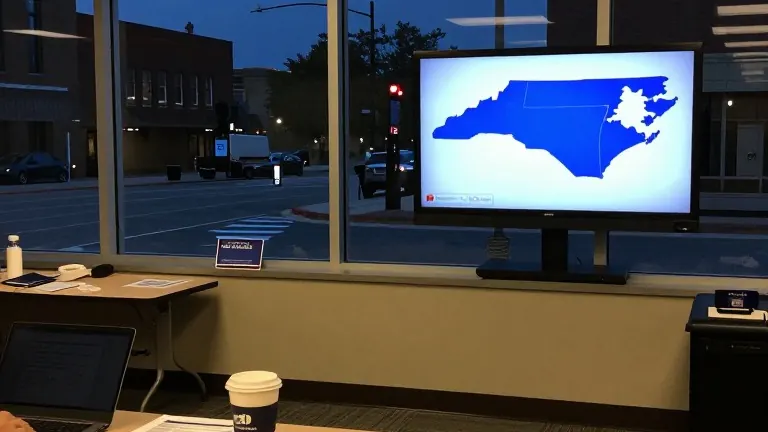
North Carolina voters chose Democrat Roy Cooper for the U.S. Senate on Tuesday, ending a long stretch of Republican control in the state's open seat. The Associated Press called the race for Cooper, marking his victory as the first time a Democrat has won that office from North Carolina since 2008. This result shifts the balance of power in the Senate for the incoming congressional term.
The contest pitted Cooper against Michael Whatley, a former chairman of the Republican National Committee. Whatley was selected by President Trump to replace retiring GOP Sen. Thom Tillis. Cooper, who served as governor from 2017 to 2024, campaigned on affordability, branding his stops as the "Make Stuff Cost Less" tour. Whatley focused on crime and immigration, highlighting a legal settlement from the pandemic era that moved inmates out of state prisons to relieve overcrowding.
Spending patterns in the race diverged sharply from national trends. Cooper and national Democratic groups outspent their Republican counterparts. In the weeks before the election, national Republican organizations pulled television ads from North Carolina and moved funds to other competitive states, including Kansas. Despite this, President Trump and Vice President Vance held multiple rallies in the state during the final weeks of the campaign.
Patrick Sebastian, a Republican strategist not involved in the Whatley campaign, argued that the economy was the primary concern for voters. He noted that shoppers at stores like Walmart are seeing price increases that limit their purchasing power. Sebastian stated that when candidates do not address these economic pressures, it becomes difficult to connect with the public. "Really it's the economy is Issue A and then Issue B is probably government corruption, that people are following the most," Sebastian said.
Polls throughout the cycle showed the economy as the top issue for North Carolina voters, rather than crime. Cooper's lead in polling widened as the election approached, and Whatley never led in the surveys. The race was initially projected to be one of the most expensive in the nation, but the gap between the candidates' financial resources and polling leads narrowed the competitive window.
Sen. Thom Tillis announced in 2025 that he would not seek reelection after President Trump threatened him with a primary challenger. Tillis had previously opposed the president's tax cut and spending bill. Since retiring from the race, Tillis has been promoting a new book that criticizes fellow Republicans. He did not campaign for Whatley during the final stretch of the election.
The victory for Cooper changes the composition of the North Carolina congressional delegation. The seat was open due to Tillis's decision to step down. Whatley's campaign had framed Cooper as a Big Oil lobbyist who would act as a rubber stamp for the White House in the Senate. Cooper's win brings a new voice to the Senate from the state, altering the party dynamics in the upper chamber.