Bolsonaro’s Flight to Miami Leaves Brazil’s Right in Disarray
The former senator’s move to the U.S. creates a leadership vacuum and complicates Washington’s relations with Lula’s reelection.
By Malik Salazar ·
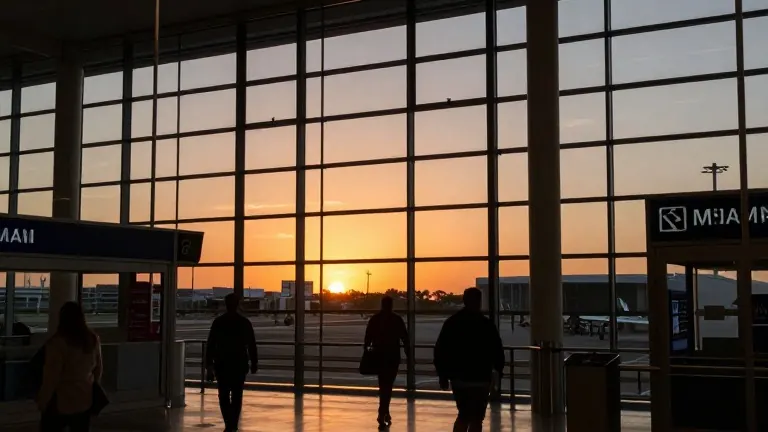
Flávio Bolsonaro is based in Miami after departing Brazil following his defeat by Luiz Inácio Lula da Silva in the presidential runoff. The 45-year-old senator for Rio de Janeiro told party representatives on Wednesday that he relocated to the United States to escape political and judicial persecution. He refused to concede the election, instead claiming he is the rightful leader of Brazil despite lacking evidence of fraud.
The move has destabilized the Brazilian right, which had unified around his campaign. Bolsonaro’s father, former President Jair Bolsonaro, named him his political heir in December 2025. The elder Bolsonaro is currently serving a 27-year sentence for attempting a coup. Flávio Bolsonaro promised in his letter to lead the opposition from abroad, stating he would take risks that domestic politicians could not.
Carlos Melo, a political-science professor at Insper university, noted that directing a campaign from a distance weakens Bolsonaro’s position. He added that the contradiction between Bolsonaro’s earlier vow not to flee and his subsequent departure further erodes his standing. However, Luciana Santana, a political scientist at the Federal University of Alagoas, argued that the right’s influence in Congress remains intact. She pointed out that the group retains the tools to block government proposals and negotiate on the public agenda.
The election result marks a setback for the regional far-right movement. Conservatives have won seven presidential elections in Latin America over the past 18 months, often citing rising crime rates. Bolsonaro’s loss stops the movement’s expansion into Brazil, the region’s largest economy and a key diplomatic player. Santana said the movement’s strength remains evident because Bolsonaro received nearly 60 million votes.
Internationally, some observers may use Bolsonaro’s flight as a symbol of political persecution to mobilize supporters. This dynamic could energize networks that strongly identify with the movement, even as the party’s leadership is disrupted.
Tensions between Washington and Brasilia have increased since the vote. President Donald Trump suggested on Monday that Lula’s reelection was rigged, a claim he made without providing specific evidence. On Wednesday, Trump said he would not comment on Bolsonaro’s assertion that he is the rightful president-elect. Instead, Trump said he gave Bolsonaro a pass to enter the country. He described the election as very strange while maintaining a pragmatic distance.
Lula’s victory positions Brazil as a counterweight to U.S. influence in the Western Hemisphere. His government has deepened trade ties with China and sought greater global influence through the BRICS group of emerging economies. Oliver Stuenkel, a researcher at the Carnegie Endowment, said Bolsonaro’s presence in the U.S. adds a new layer of problems to an already complicated bilateral relationship.
Stuenkel noted that the presence of two Bolsonaro brothers in the U.S. could lead to increased lobbying on policies affecting Brazil. He said the outcome depends on whether Trump pursues a pragmatic stance that recognizes the failure of U.S. pressure to elect Flávio, or if friction between the two governments continues.
The next step for the Brazilian right is to determine how it will organize its opposition from within Congress while Bolsonaro operates from Miami. Lula’s administration is expected to begin implementing its agenda, which includes strengthening Brazil’s nonaligned foreign policy and expanding trade partnerships.