Syrians March Against Southern Incursions
National rallies erupted after a disabled man was killed in a recent Israeli military operation in the south.
By Malik Salazar ·
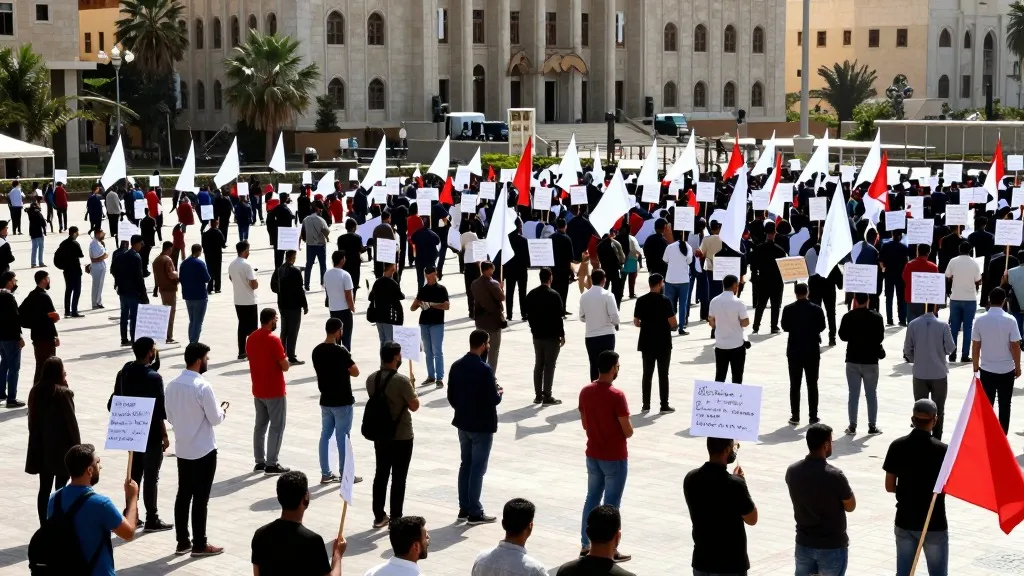
Nationwide protests swept through Syria on Friday as citizens demanded an end to persistent military operations in the country's south. The demonstrations were sparked by a specific incident earlier in the week in which a man with a disability lost his life during an incursion.
State media confirmed that large crowds formed in the capital, Damascus, and in Homs, a major city in the central region. Participants in these gatherings focused their anger on military actions in the southern provinces of Quneitra and Daraa. In Daraa, an AFP correspondent observed hundreds of attendees at one rally, with many waving national flags to show solidarity.
Taysir al-Hariri, a participant in the protests, explained the motivation behind the turnout to the news agency. He stated that the crowd aimed to "send a message to the world" that the nation remains united "against Israeli incursions and against anyone who is tempted to tamper. with national security". This sentiment reflected a broader desire to project internal cohesion despite external pressure.
Visuals from state television highlighted a specific slogan carried by marchers: "We are all Moaz." This phrase references the man with special needs who was killed by fire during a recent operation in Daraa province. His death became the focal point for many demonstrators, turning a local tragedy into a national symbol of the conflict.
In a separate but related display, the family of a Syrian man detained by Israeli forces gathered outside a United Nations building in Damascus. They called for his immediate release. Several children in the crowd held up signs that read "I want my dad," adding a personal and emotional dimension to the political demands of the day.
Military activity continued alongside the protests. Reports from Friday indicated that Israeli forces advanced into sections of Quneitra province. They blocked multiple roads in the area. Troops have also bulldozed olive groves, established new checkpoints, and detained local residents, intensifying the friction in the border regions.
These events occur against a backdrop of significant tension since the new government assumed control in December 2024. That government took power after the fall of longtime ruler Bashar al-Assad. Since then, the Israeli military has executed hundreds of strikes within Syrian territory. It has also maintained a frequent presence through border incursions.
Israel has also moved troops into a buffer zone that was previously patrolled by the United Nations. This area had separated the two armies on the Golan Heights, which is mainly occupied by Israel, since 1974. The continued presence of forces in this region marks a shift in the long-standing status quo.
The stakes remain high as Israel has vowed to keep a military presence in a designated "security zone" in southern Syria. The objective is to create a broader demilitarized area. This strategy aims to secure the border but has led to ongoing clashes and the national rallies seen on Friday.