Spain Deports 16 Migrants From Ceuta After Asylum Rejections
The first removals since July's mass crossing have drawn criticism from Amnesty International, which argues the prime minister's government is putting deportees at risk.
By Sarah Montgomery ·
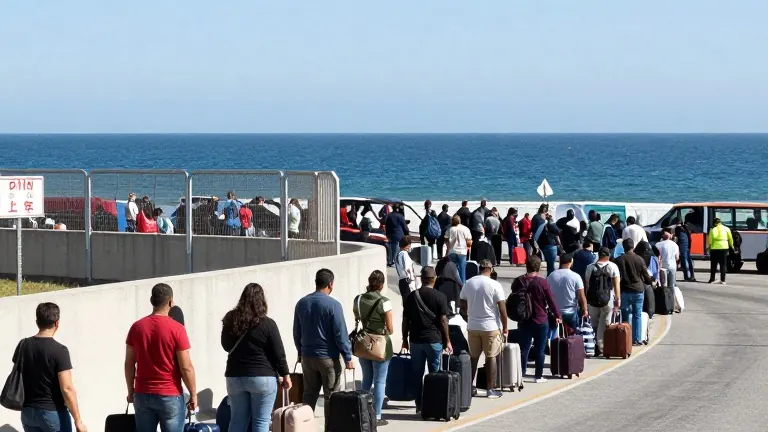
Spain expelled 16 migrants from the North African territory of Ceuta on Tuesday, marking the first group deportation since approximately 80,000 people crossed the border from Morocco in late July. The Spanish Interior Ministry confirmed the removals, stating that Morocco agreed to accept the individuals after their asylum applications were denied. Non-governmental organizations identified the group as comprising people from African, Middle Eastern, and Asian countries.
Amnesty International criticized the move, arguing that the left-wing government of Prime Minister Pedro Sanchez is endangering the human rights of those sent back. Virginia Alvarez, a researcher for the organization, noted that Morocco does not respect many human rights standards. She stated that despite Spain's progressive rhetoric in Europe, it is not ensuring proper human rights guarantees for people crossing its borders in Ceuta and Melilla.
Madrid disputes the criticism. The Interior Ministry told Reuters that the European Union classifies Morocco as a safe country. Officials added that the deportations are carried out with all necessary safeguards to protect the rights of the migrants involved.
The July border crossing remains a dominant political issue in Spain. At least 100 people died during the 48-hour influx into the autonomous city, which covers 18.5 square kilometers and has a resident population of about 80,000. Sanchez faces snap elections scheduled for November 29, where the handling of the crisis has become a central campaign point.
Political pressure has mounted in recent months. Tens of thousands of protesters have gathered across the country to denounce the government's response. Santiago Abascal, the leader of the far-right Vox Party, has labeled the prime minister a traitor over the situation. Right-wing parties have consistently used the crisis to attack Sanchez's leadership.
While the majority of the 80,000 arrivals in late July have left Ceuta, approximately 8,000 migrants remain in the territory. Current conditions vary by individual circumstance. Some migrants sleep on the streets, while others are housed by the Spanish state, charitable organizations, and civil society groups.