Pyongyang Mass-Produces Drones as Seoul Tests Hypersonic Missile
South Korea launched a hypersonic ballistic missile in response to a North Korean test, while Moscow shares technical data to help Pyongyang build attack drones in volume.
By Malik Salazar ·
South Korea fired a hypersonic ballistic missile five days after North Korea tested a nuclear-capable weapon, marking a sharper response to recent provocations. The two nations are locked in a cycle of escalation fueled by a deepening military partnership between Pyongyang and Moscow.
In early October, North Korea launched a tactical ballistic missile that it claims can carry a nuclear payload. Seoul and Tokyo estimated the weapon traveled approximately 700 kilometers, though Pyongyang stated the range reached 1,000 kilometers. Instead of issuing a standard statement condemning the launch as provocative, the South Korean government demonstrated its own capability by testing a hypersonic missile. President Lee Jae Myung observed the launch, signaling growing concern over the pace of North Korea’s technical progress.
Analyst Anton Ponomarenko attributes part of this progress to Russian assistance. Moscow has been sharing deployment data and technical feedback with Pyongyang, which has allowed North Korean engineers to refine the accuracy and maneuverability of their weapons. Ponomarenko described the resulting threat to South Korea as more substantial than previous iterations.
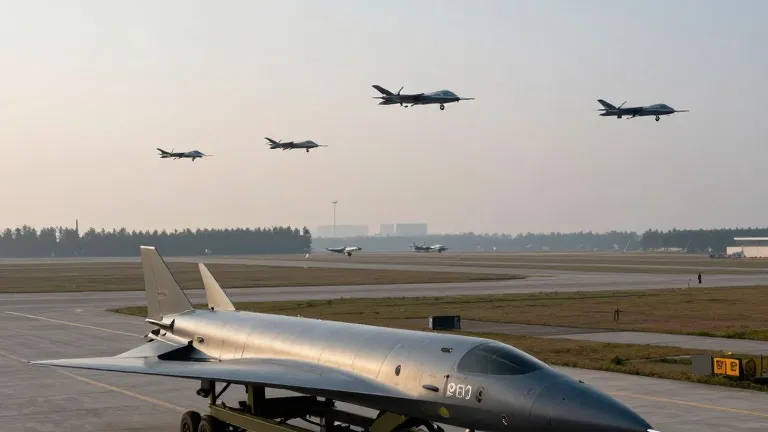
Russia is also aiding North Korea in the mass production of unmanned systems. The New York Times reported that Pyongyang has studied drone warfare in Ukraine and the Middle East, noting how inexpensive aircraft can saturate expensive air defense networks. During a military exercise last month, North Korean forces simulated a combined attack on a target island using a drone swarm alongside cruise and ballistic missiles striking from multiple directions.
Reports indicate that up to 25,000 North Korean workers are currently employed at Russian military facilities, including plants in Alabuga, Tatarstan. These workers are helping produce military drones. Additionally, a North Korean missile unit equipped with 120 ballistic missiles and six launchers has begun deploying in western Russia, potentially for use against Ukraine.
The partnership has expanded since Russia’s full-scale invasion of Ukraine. In August, Moscow requested KN-30 ballistic missiles from Pyongyang. North Korea also announced tests of a modernized 240mm multiple-launch rocket system, a tactical ballistic missile, and a 155mm long-range artillery shell in June.
The New York Times argues that these evolving tactics will force South Korea and its allies to redesign their air defense systems at high cost. South Korea’s recent hypersonic missile test serves as the latest indicator that Seoul is adjusting its strategy to counter the rapid expansion of North Korean drone and missile capabilities.