One White House Pool and Dozens of Reporters in Trump's Relocation Plan
The president hinted that the press corps might be moved to a new site to potentially reveal a historic swimming pool, a plan that has sparked debate over the future of the Brady Briefing Room.
By Harper Laurent ·
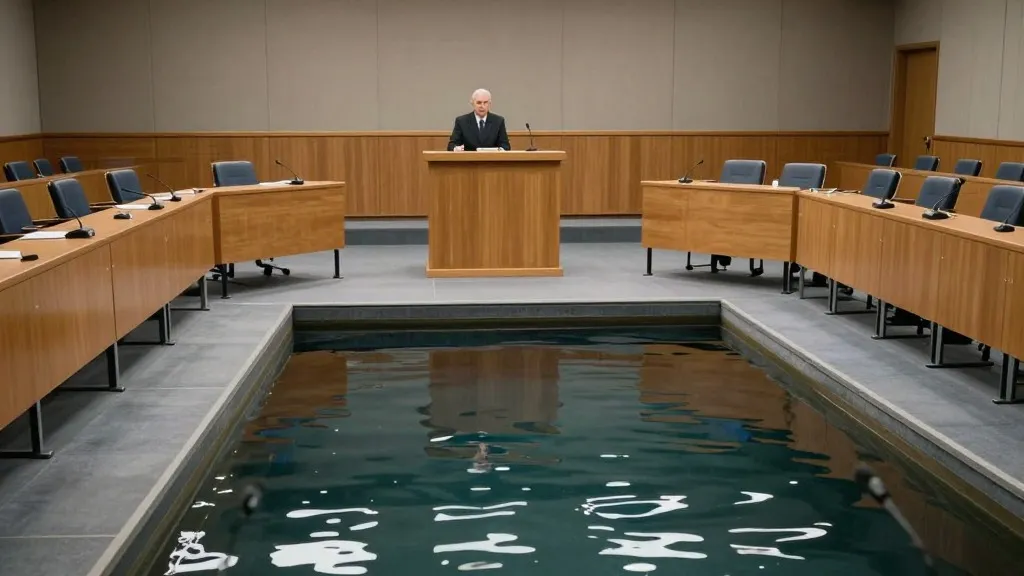
A historic pool lies hidden beneath the feet of the White House press corps, and the president is considering whether to reveal it.
President Donald Trump posted on Truth Social this past Friday to address rumors swirling about the James S. Brady Press Briefing Room. He dismissed the idea that he wanted to demolish the room entirely to restore the water feature below, labeling such reports as fake news. He stated emphatically that he had never considered such a stupid thing. However, he did suggest that the dozens of reporters covering the administration could be relocated to a less obnoxious location, implying a physical move rather than a complete elimination of the space.
The speculation gained traction after The New York Times reported earlier this week that Trump had pitched the idea to his former press secretary, Karoline Leavitt. According to that account, the plan was to move journalists out of the current briefing room to make way for the pool. The idea did not advance while Leavitt held the position, a role she occupied until late August. The pool itself has a deep historical connection to the presidency, having been built in 1933 for Franklin D. Roosevelt. The president, who suffered from polio, used the water to ease soreness in his limbs. Decades later, Richard Nixon ordered a floor to be constructed over the pool in the 1970s to create space for the expanding media corps. The water still sits there, concealed beneath the concrete.
Leavitt offered her own perspective on the situation during an interview on HBO's Real Time with Bill Maher this past Friday. She described the president as flirting with the concept of restoring the pool to its former glory. She noted that while he may want to bring it back, she remained uncertain if he would ultimately follow through on the project. Her comments added a layer of ambiguity to the administration's stance, leaving the fate of the briefing room in a state of flux.
These remarks arrive at a time of heightened friction between the White House and the media. Last month, the administration barred journalists from CNN, MSNBC, and POLITICO from the premises. Free speech advocates argued that the move violated First Amendment protections. A federal judge subsequently ruled that the order was likely unconstitutional, compelling the White House to restore the journalists' access. The administration continues to contest that legal decision, adding to the ongoing tension.
Trump has also engaged in direct exchanges with individual reporters. During an Oval Office event on Tuesday, he confronted Andrew Feinberg, a correspondent for The Independent, as the journalist attempted to pose a question. The president questioned Feinberg's well-being, asking if there was something wrong with him. The White House later amplified the moment by sharing it on social media platforms. This interaction exemplifies the broader dynamic of criticism and confrontation that has characterized the current news cycle.
Any structural changes to the briefing room would join a series of controversial renovations on the White House grounds since the president returned to power. These projects include the demolition of the East Wing to construct a new ballroom, the installation of concrete pavers over the central lawn of the Rose Garden, and the construction of a helipad on the South Lawn. The White House did not immediately respond to requests for comment regarding the potential relocation of the press corps.
The next steps remain unclear as the administration weighs the practicalities of moving the media corps. For now, the pool remains hidden, and the briefing room continues to serve as the primary stage for daily press interactions. The outcome of this potential renovation will likely become a focal point for both political observers and the journalists who cover the executive branch.
More Politics · World news · Report a business · Got a Story?