
Historian traces 250 years of Captain Cook myths
Tony Ballantyne's new book examines how various groups have shaped the explorer's legacy since his death in 1779.
By Malik Salazar ·
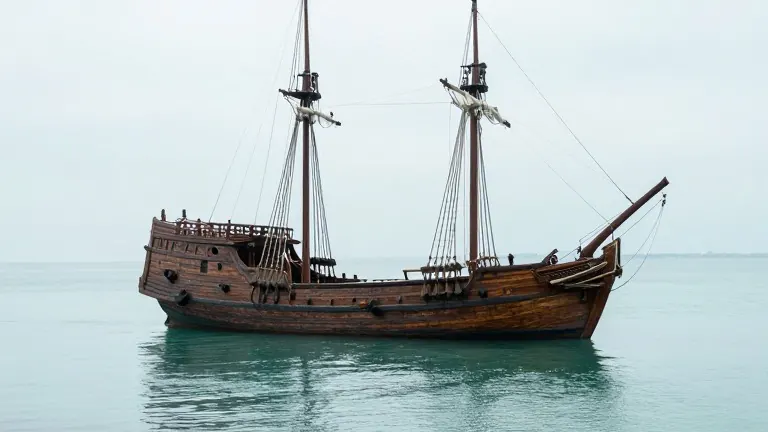
Tony Ballantyne has written a book of more than 450 pages that focuses less on Captain Cook's voyages and more on how the public has remembered him for the last two centuries. The University of Otago historian argues that the explorer's identity is not a fixed historical fact but a story that changes based on who is telling it.
Ballantyne begins his analysis with a 1989 article in the Otago Daily Times. The piece was written by visiting Hawaiian scholar Haunani-Kay Trask, who described Cook and his crew as syphilitic, tubercular racists. That description challenged the traditional New Zealand view of Cook as a benign explorer who put the country on the map. The conflicting narratives sparked a public debate that reached the Holmes show, a popular radio program at the time.
The author examines how Cook's reputation was constructed immediately after his death. Admiralty officials and Cook's widow, Elizabeth, worked to shape his public image to suit their own interests. Ballantyne traces these early efforts to control the narrative through various primary sources and historical records.
The book covers Cook's global impact, noting that he explored the Pacific, Australia, the Americas, and Antarctica. While the text centers on the New Zealand perspective, Ballantyne includes detailed accounts of the relationship between the captain and the people of Gisborne. The author investigates whether Young Nick's Head was indeed the first point of contact, a question that remains part of the local saga.
Ballantyne also analyzes Cook's presence in popular culture and the arts. He argues that artists and writers have played a major role in defining how modern audiences perceive the explorer. These chapters explore how visual and literary interpretations have reinforced or altered the official history.
The central argument of the text is that Cook has been whoever people have needed him to be. The author suggests that the question of who the real Cook was matters less than understanding how his memory has been used for different purposes over time. The book serves as a comprehensive look at the shifting nature of historical memory.
Mike Houlahan, the political editor of the Otago Daily Times, reviewed the work. He noted that the book is a challenging and entertaining read that moves beyond standard historiography. The publication offers a detailed look at how an international figure became a local symbol and a global icon.