Democrats Take Control of Congress and State Governments in Sweeping Midterm Win
Voters elected a new majority in both chambers of Congress and flipped state legislatures across the nation, marking a significant shift in power from Republicans to Democrats.
By Malik Salazar ·

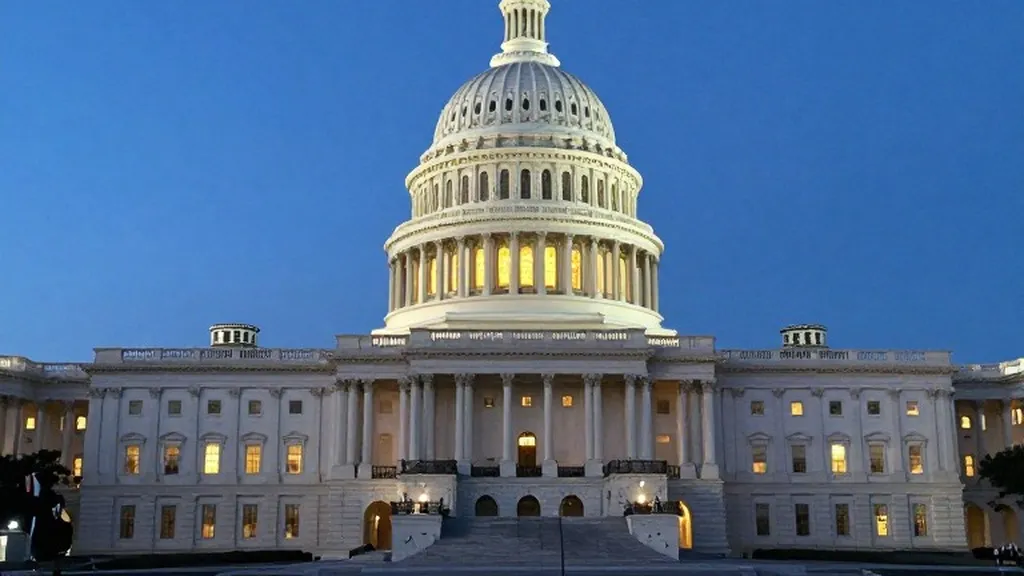
Democratic candidates secured majorities in both the United States House of Representatives and the United States Senate following the midterm elections held on Tuesday, November 3. As of 4:00 PM ET on November 6, Democrats had won 250 House seats and 157 Republican seats, resulting in a net gain of at least 41 seats. In the Senate, Democrats captured 20 seats while Republicans held 13, giving the party a 54-44 majority with two races remaining uncalled. This outcome represents a significant swing, with Democrats picking up at least 43 House seats and seven Senate seats that were previously held by Republicans or independents.
The shift in congressional power means that Democrats will control the legislative agenda when the new Congress convenes on January 3, 2027. In the House, the Democratic majority allows the party to set the legislative calendar and appoint committee chairs. In the Senate, the 54-seat majority provides enough votes to pass legislation without Republican support, although the party still requires a supermajority of 60 votes to overcome filibusters. The net loss of seven Senate seats for Republicans places this election in the top 20% of election years in terms of seat swings against a sitting president's party.
Beyond Congress, Democrats achieved full control of state governments in at least six states where they previously shared power with Republicans. These states include Michigan, Minnesota, Pennsylvania, Nevada, Wisconsin, and Arizona. In Arizona, Democrats won control of both state legislative chambers and retained the governor's office, giving the party its first trifecta in the state since 1966. Democratic Governor Katie Hobbs, who is in her first term, has stated she plans to address water issues, affordability, and fraud in the state's school voucher program. Republicans had held the Arizona House for 60 years and the Senate since the early 1990s.
The Texas race marked a historic change in state leadership, with Democrat Gina Hinojosa defeating Republican Governor Greg Abbott. Hinojosa will become the state's first Democratic governor since Ann Richards was ousted in 1994 and the first Latina to hold the office. Democrats also won control of the Texas House, which Republicans had held since 2003, though Republicans retained the state Senate. This shift in Texas power has already led to local policy changes, such as Houston Mayor John Whitmire directing police to limit cooperation with federal immigration authorities. Whitmire signed an order stating that the city would focus on immigrants who pose a danger rather than those going about their work and education.
Democrats also flipped the lower chambers of the legislatures in Maine and North Carolina and both chambers in New Hampshire, where Republican Kelly Ayotte was reelected. The National Council of State Legislatures indicated that this election is likely to be the one with the most legislative seats and chambers changing parties since the 2010 election, when Republicans took over governments across the country amid the Great Recession. In total, Democrats won 46 of the 88 state legislative chambers on the ballot, while Republicans won 39. One chamber went to a bipartisan coalition, and two remain uncalled.
Governors' races saw five changes in party control, all from Republicans to Democrats. Democrats won 22 gubernatorial races, while Republicans won 12, with two races still undecided. Georgia voters elected Keisha Lance Bottoms as the state's first Democratic senator in more than two decades and the first Black woman governor in the country. In Kansas, which has not sent a Democrat to the U.S. Senate since 1932, Rev. Adam Hamilton won the Senate seat. These victories indicate a broad reach for Democratic candidates across states that were previously considered solidly Republican.
Republican officials and strategists are assessing the results and the implications for the party's future. Former Arizona Senator Jeff Flake, a vocal critic of the current administration, joined other Republicans in reflecting on the upsets. The Republican Party had held a 220-215 majority in the House and a 53-47 majority in the Senate heading into the election. The loss of control in both chambers signals a potential period of increased scrutiny for the administration's policies, including foreign policy and trade, as Democrats aim to check executive power.
The election results also highlighted the financial scale of the campaign, with outside groups and independent committees spending at least $2 billion in the Senate race alone. Republican-affiliated groups spent roughly 60% more than Democratic-aligned groups, yet they still lost at least seven seats. Elon Musk spent nearly half a billion dollars on the elections, but the record expenditure yielded limited results for the world's richest man. The nonpartisan watchdog group OpenSecrets noted that the 2026 midterms are expected to be the most expensive in history.
Democratic leaders are now turning their attention to the 2028 presidential primary, which is likely to be one of the most crowded and unpredictable in decades. The party's divide over how to win back the White House may be exposed during this period. Meanwhile, Republicans are preparing for a period of opposition, with some allies calling for leadership changes in the White House. The new congressional leadership will begin taking office in January, with new terms for House members starting on January 3, 2027, and Senate terms beginning on the same date for those elected in the regularly scheduled elections.
The election was characterized by high voter turnout, with more than 59 million people casting ballots before election day, surpassing early-voter turnout from 2022. Voters cited high prices, the war in Iran, and concerns about government corruption as key factors in their decisions. The Associated Press called enough legislative races to confirm the flips in both chambers in Arizona, and the news organization noted that there have not been major disputes or disruptions this year. Results are still pending in Alaska and Kansas for some offices, but the overall trend points to a decisive shift in political power.