ASUS ProArt P16 costs up to $7,000 to run local AI models
The laptop uses NVIDIA's new Arm-based chip and offers high performance for AI tasks, though it trades off gaming value and battery life.
By Malik Salazar ·

ASUS has released the ProArt P16, the first laptop built around NVIDIA’s RTX Spark system-on-a-chip. The device targets professional creators and AI developers, positioning itself as a premium tool for running large language models locally. Engadget’s review, published on October 23, describes the machine as an impressive piece of hardware that is best suited for specific technical workflows rather than general consumers.
The RTX Spark chip integrates a 20-core Arm CPU, a Blackwell GPU, and up to 128GB of unified memory. This architecture mirrors Apple’s M-series designs but runs on Windows. The reviewer noted that this setup allows the laptop to run heavy AI models like Qwen3.8 27B, which consumes 42GB of memory, without slowing down the rest of the system. The platform is intended to sit alongside existing x86 and Qualcomm Snapdragon X processors, creating a new category of Arm-based PCs for AI enthusiasts.
Performance benchmarks show a mixed bag for the P16. In PCMark 10 Applications tests, it scored approximately 3,000 points lower than ASUS’s A16, which uses a Snapdragon X2 Elite chip. It also trailed slightly in Geekbench 6 single-threaded CPU tests. However, the graphics and AI capabilities outperformed competitors. The P16 beat a MacBook Pro with an M5 Max chip by 4,700 points in Geekbench 6 GPU testing. In Procyon’s AI Computer Vision 2 test, it recorded a score of 3,895 compared to Apple’s 3,267. For image generation, the P16 scored 1,519, surpassing Apple’s result by 600 points.
Gaming performance is capable but comes with caveats. The graphics hardware matches the power of an RTX 5070 mobile GPU while drawing less energy. In Control: Resonant at 1440p with ultra settings and medium ray tracing, the laptop achieved 70 frames per second. Lowering the settings increased the frame rate to 120 fps. Cyberpunk 2077 also ran at high settings, though the cooling fans became loud. Because the CPU is Arm-based, many games rely on Microsoft’s Prism emulator, which can reduce performance and cause compatibility issues. Native Arm64 builds exist for titles like Fortnite and DOTA 2, but NVIDIA is still working with anti-cheat developers for other multiplayer games.
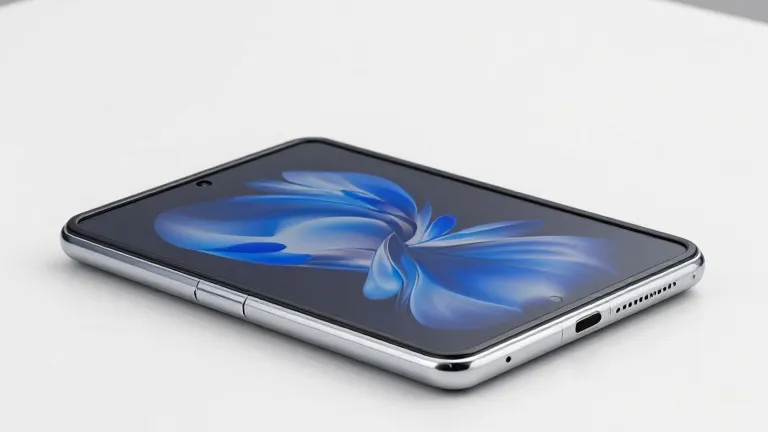
The physical design of the ProArt P16 received praise for its build quality. The aluminum chassis is sturdy, and the 16-inch OLED display reaches 1,600 nits, making it one of the brightest laptop screens available. The laptop weighs 3.9 pounds, which is lighter than Apple’s 16-inch MacBook Pro at 4.7 pounds. It includes three USB-C ports, a USB Type A port, HDMI, a headphone jack, and an SD card reader, though it lacks an Ethernet port. The keyboard and haptic touchpad are generously sized, though the black finish shows fingerprints easily.
Battery life is a weak point for the device. In PCMark 10 Applications testing, the laptop lasted ten hours and 51 minutes. This is well below the 15-plus hours typical of many premium laptops. Performance did not drop when the laptop was unplugged from power. The lack of battery endurance may limit its utility for users who need all-day portability without a charger.
Pricing is the primary barrier for most buyers. The ProArt P16 starts at $2,800, but costs rise sharply with memory upgrades. The review unit, equipped with 128GB of RAM, costs $7,000. For gamers, the reviewer suggested the ASUS Zephyrus G16, which features an RTX 5070 and a 240Hz OLED screen for $2,124 at Best Buy. That model offers better gaming performance and full compatibility. The review concluded that AI professionals can justify the high cost of the P16, but general users and gamers should wait at least a year before considering RTX Spark hardware.
The release of the ProArt P16 marks a shift in the premium laptop market. By integrating NVIDIA’s RTX Spark chip, ASUS is offering a machine that prioritizes AI compute and unified memory over traditional x86 performance. While the hardware is powerful, the high price point and specific target audience mean it will not replace standard laptops for most people. The device serves as a proof of concept for Arm-based AI workstations in the Windows ecosystem.