Foldable Reality: Apple's iPhone Duo Debuts at $1,999 With Software Glitches
Apple's first folding device arrives with a premium price tag, a return to Touch ID, and significant challenges in app optimization and accessory compatibility.
By Sarah Montgomery ·
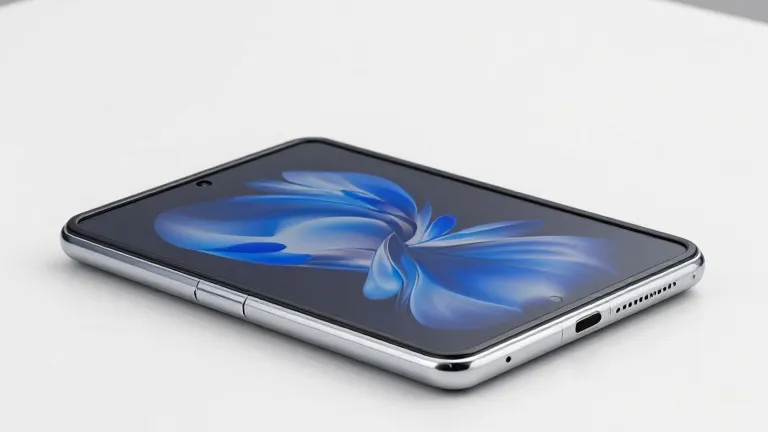
Apple has finally entered the folding smartphone market with the release of the iPhone Duo, a device priced at $1,999 that arrives seven years after Samsung launched the Galaxy Fold. The long development period appears to have yielded a refined piece of hardware, with early assessments describing it as a highly capable foldable. However, the high price point and several usability quirks suggest that buyers should consider a few practical details before unboxing their new devices.
The most pressing challenge for the iPhone Duo is software adaptation. The device features a 5.4-inch external display and a 7.6-inch internal screen, a form factor that many third-party applications have not yet fully embraced. While Apple’s own redesigned software performs well, numerous external apps display as narrow vertical strips flanked by thick black bars. Although major platforms like Slack, Instagram, DoorDash, and WhatsApp have been updated for iOS 27.1, some still exhibit interface errors. Apple has also shifted navigation controls to the right side of the screen rather than the bottom center. Since the device is currently back-ordered for several weeks, developers may have time to resolve these issues before many customers receive their hardware.
In a notable design shift, the iPhone Duo abandons Face ID in favor of Touch ID, with the sensor located on the right side of the device. This is the first time a flagship iPhone has relied on fingerprint scanning, a feature that has persisted on the iPhone SE, iPads, and MacBooks. The decision is likely driven by the device's thin profile. While some users may prefer the speed of facial recognition, others may appreciate the return of the fingerprint sensor. The Dynamic Island remains on the device but has been repositioned to the top-right corner around the external selfie camera.
Accessories present some logistical hurdles. The phone supports MagSafe, yet when unfolded and attached to car docks or tripods, it tends to tip due to uneven weight distribution. Third-party manufacturers may need to develop anti-rotation magnets to fix this issue. Magnetic wallets also sit awkwardly because the phone is shorter than standard iPhones, causing them to extend past the bottom edge. Apple has not released an official solution for this mismatch.
Photography capabilities stand out as a major strength. Users can capture self-portraits using the superior rear cameras while previewing on the external screen. A dedicated control allows the full camera interface to move to the outer display, disabling the inner screen to prevent accidental inputs. Additional features include a preview mode for subjects and a child-focused mode that displays Snoopy animations to capture attention.
Multitasking is handled by dragging apps to either side of the internal display for side-by-side use. Tapping the central bar locks these two apps into a pair, though they cannot be saved as a single combined icon. Users are advised to protect the internal display with a case, as the matte nano-texture finish is an integral component that should not be removed. Apple offers a $19 out-of-warranty replacement for damaged finishes, while a cracked internal screen costs $999 without AppleCare+.
Future software updates will introduce a split keyboard for easier typing on the wide screen, along with a Reachability feature that shifts apps horizontally rather than vertically. Support for the USB-C Apple Pencil will also arrive later this year, enhancing the writing experience on the textured surface, though the phone lacks a built-in storage slot for the stylus.