Paperwork: Organizing documents without stress
A professional organizer with more than 20 years of experience suggests starting with the nearest pile rather than the garage, and using specific deadlines instead of vague urgency.
By Harper Laurent ·
More than 20 years. That is how long Kacy Paide has worked as a professional organizer, specifically focusing on paper clutter. Her primary advice for those facing a mountain of documents is to stop rushing and take control of the pace.
Paide recommends beginning with the paperwork immediately at hand, such as piles on a desk or dining table. She argues that the items requiring immediate action are usually closest to the person. She instructs clients to split these documents into two distinct categories: active and inactive. Active items require follow up, like a bill payment. Inactive items, including receipts or sentimental letters, can be set aside for later review.
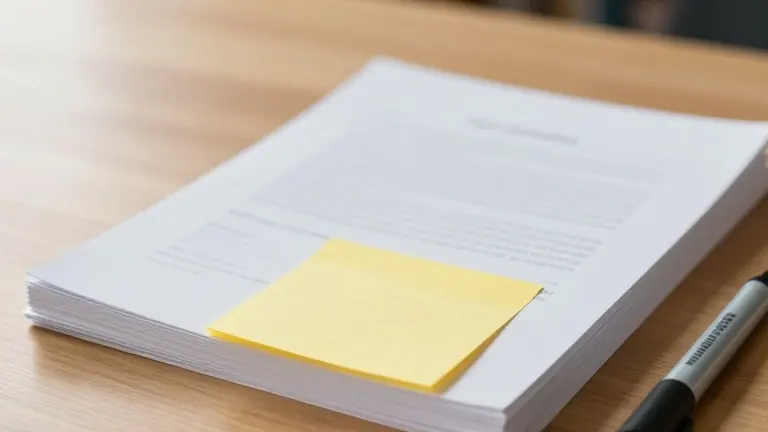
For active tasks, Paide advises writing the specific due date in bold on a sticky note and attaching it to the document. She suggests using concrete dates, such as 'due by Nov. 15' or 'start no later than 12/1.' She warns that vague labels like 'urgent' lose their meaning over time.
Creating a filing system does not require complex labeling. Paide notes that the best system is the one a person will actually use. She prefers a simple method for vital records like passports and marriage certificates. These documents should go in a brightly colored folder. She places this folder at the front or back of a file box to make it easily accessible without rifling through other papers.
Paide uses standard file folders and labels them with sticky notes and permanent markers. This allows her to reorganize without discarding the folders if the system changes. She also recommends buying decorative file boxes for bookshelves to create a visual system that is both functional and aesthetic.
Deciding what to discard requires a specific test: under what circumstances would you need to produce this document? Paide notes that people often feel compelled to shred anything with their name and address on it to sleep well at night. However, the Federal Trade Commission advises destroying documents containing sensitive data to prevent identity theft. This includes account numbers, birth dates, passwords, PINs, signatures, and Social Security numbers.
For difficult items like old love letters or divorce papers, Paide suggests bringing in a friend or family member. She encourages people to voice their thoughts about the documents as they sort. In her experience, clients reach a decision to keep or toss these items surprisingly quickly. Paide adds that organizing is an ongoing process and suggests dedicating 25 minutes at a time to the task.