Oregon House Race Costs Over $1 Million as Lawmaker Switches Parties
Cyrus Javadi, a former Republican who helped pass a gas tax hike, faces a farmer in a district where nonaffiliated voters hold the balance of power.
By Malik Salazar ·
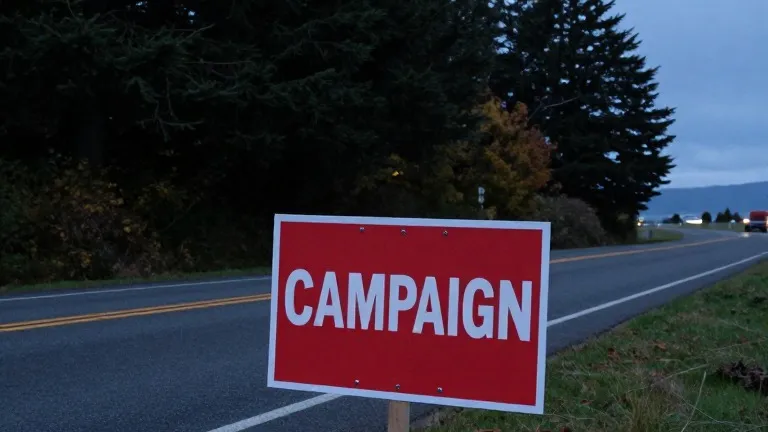
Campaigns in Oregon House District 32 have raised more than $1 million each, a figure that may make this the state's most expensive legislative contest of the year. The money has fueled television spots in the Portland market, reaching voters in a coastal district that stretches from Astoria to Neskowin.
The high cost reflects a deeply contested race between Cyrus Javadi and Max Sherman. Javadi, 49, won the seat in 2022 and 2024 as a Republican. Last year, he shifted his party registration to Democrat after providing the decisive vote for Governor Tina Kotek's transportation funding package. That package included a 6-cent gas tax increase, a measure Javadi defended as necessary for the region's deteriorating roads. Sherman, a 69-year-old farmer and retired teacher from Hebo, runs on a platform of cutting regulation and opposing new taxes.
The district's voting dynamics have shifted in recent cycles. While registered Democrats outnumber Republicans by approximately 2,000, nonaffiliated voters form the largest group among the district's roughly 55,800 voters. This demographic often decides close races, a factor that has driven Javadi to canvass neighborhoods personally. He meets 30 to 40 people a day, a routine he plans to continue until Election Day.
Political leaders in the district have reacted with mixed feelings to Javadi's change. Lisa Lamping, chair of the Clatsop County Republicans, described the switch as opportunistic. She noted that local Republicans feel a range of emotions toward the former colleague, from anger to relief. Betsy Johnson, a former state legislator who represented the area for 20 years, has joined the race by endorsing Sherman in television advertisements.
Sherman campaigns on his background in agriculture, fishing, and forestry, sectors he calls the economic engines of the North Coast. He argues that Javadi has lost the trust of many residents due to his shifting positions. "A lot of people here have lost trust in him," Sherman said. He positions himself as a candidate who supports funding the Oregon Department of Transportation without raising taxes.
Javadi frames his evolution as a strength, citing his upbringing in a conservative Mormon family in Utah. He said he grew to find Republican arguments less convincing, leading to his support for a Democratic bill that made it harder for school districts to ban books. He also backed a measure to use taxes on healthcare providers to raise federal Medicaid funding. Javadi is the only Republican to have supported Kotek's $4.3 billion transportation plan, a vote he says was the right choice despite the political cost.
Voters rejected the transportation tax package in a May election. Javadi acknowledges the defeat but maintains that the state needs more revenue for infrastructure. He argues that the vote signaled a desire for road repairs without a gas tax hike. His campaign emphasizes that he stands by his values, a message that has drawn support from some Democrats in the region.
Both candidates describe the race as close. Sherman called it a "total toss-up" that "could be a nail-biter." The final results will depend on turnout among nonaffiliated voters, a group that has increasingly influenced outcomes in coastal Oregon.
More Politics · Salem news · Report a business · Got a Story?