How 1,000 Songs in Your Pocket Changed Digital Music
Twenty-five years after its debut, a look back at the device that aimed to put a user's entire music collection into a small, portable form factor.
By Malik Salazar ·
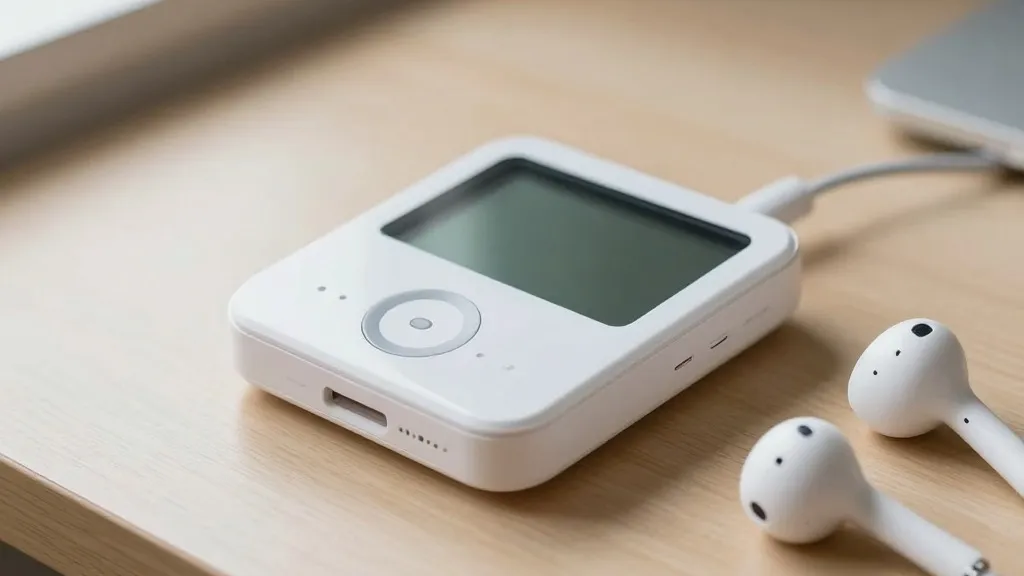
Twenty-five years ago today, a device was unveiled that aimed to solve a common problem for music fans: carrying a large collection of songs. The product, a portable digital player, was marketed with a specific capacity: 5 gigabytes of storage, which was said to be enough for 1,000 songs. This claim of putting a user's entire music library into a small package was the central premise of the device's introduction. The product was priced at $399.
At the time, the market for portable digital music was already populated. Apple's CEO, Steve Jobs, acknowledged the existence of other companies offering such devices. He noted, however, that “none of them has really found the recipe yet, for digital music.” The presentation at the time identified four main categories of portable digital music solutions: CD players, MP3 CD players, flash-based players, and hard disk-based jukebox players. Apple chose to enter with the last category.
The hardware design was a key part of its appeal. The device was built to be small and portable, with dimensions of 2.4 x 4 x 0.78 inches and a weight of 6.5 ounces. Its compact form factor was made possible by a Toshiba hard drive that was 1.8 inches in diameter and 0.2 inches thick. The device featured a lithium-polymer battery for up to 10 hours of playback. The user interface was designed for simplicity, with a scroll wheel for navigating playlists and other content. The product also offered fast file transfers. A FireWire 400 connection was used to move a CD's worth of music to the device in an estimated five to 10 seconds.
In addition to the hardware, a software feature was presented as a key part of the product's design. A feature called Auto-Sync was designed to link the device's music library with a user's music collection on their computer. This meant that when the device was connected to a computer for charging or transfer, the two music libraries would be synchronized. The device was also able to function as an external hard drive.
The launch of this device occurred during a specific period for its parent company. Apple had recently moved its computers to the Mac OS X operating system and had seen success with its iBook and iMac lines. The company was also navigating the period after the dot-com bubble burst. Jobs had stated a goal of making the Mac the hub for a user's digital lifestyle, connecting to various digital devices, and this portable music player was part of that plan.
The device's role in the market evolved over time. A different type of device, a smartphone, launched over five years after this product's introduction. The two products were sold alongside each other for more than a decade. The final model of the music player was released in May 2019, and the product line was officially discontinued in May 2022.