Tesla Targets Late 2027 for Optimus Deliveries, Citing Persistent Hand and AI Hurdles
Elon Musk acknowledges that the robot’s dexterity and durability require significant engineering fixes before external customers receive units, a timeline that aligns closely with rivals like XPeng and Boston Dynamics.
By Lucia Herrera ·
Tesla has officially set a target for late 2027 to begin delivering its Optimus humanoid robots to outside customers, a timeline Elon Musk confirmed during the company’s Q3 2026 earnings call. While the automaker has initiated early production on its high-volume line in Fremont, the CEO emphasized that three critical areas—hand dexterity, overall durability, and artificial intelligence—remain unsolved. These challenges represent the core bottlenecks currently facing the entire humanoid robotics industry, and Musk’s comments suggest that a fully capable, general-purpose robot is still more than a year away from widespread external availability.
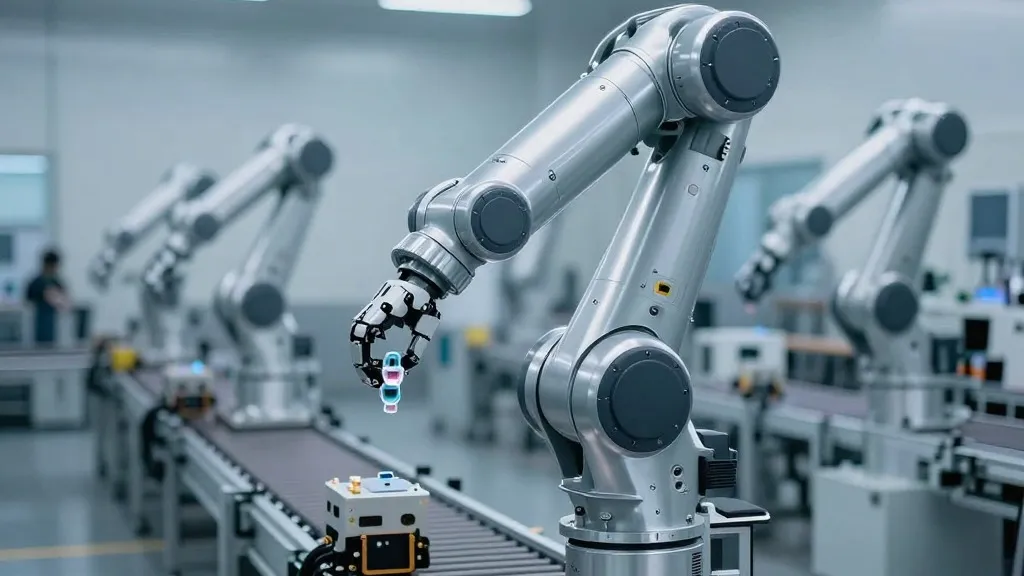
Musk stated that most of the production line designed to manufacture a million robots annually is already installed in Fremont, where Model S and X production once took place. However, he cautioned that reaching the target rate of approximately 20,000 units per week will take at least a year, potentially longer, due to ongoing design modifications. The primary focus for the next twelve months is solving reliability issues, specifically ensuring the robot does not wear out after just one month of continuous use. Once these mechanical and software hurdles are cleared, Tesla plans to start with industrial applications that are dangerous, repetitive, or require 24/7 operation.
During the call, a Tesla Optimus engineer identified the hand as the most difficult hardware component to finalize, citing the need for fingers that are soft enough for delicate handling yet robust enough to withstand constant wear. Custom gears also remain a source of reliability concern. Musk agreed, noting that unlike human skin, robot fingers cannot heal, making material science and mechanical design critical. On the software side, the company is still refining its AI architecture. Lacking a large fleet of robots to collect real-world data like it does for its vehicle fleet, Tesla plans to build 10,000 to 20,000 units to practice tasks in a dedicated "Optimus Academy." The company also intends to integrate its AI5 chip into the robots around April 2027.
Musk promised a video demonstration within the next one to two months showing the robot performing unscripted tasks, arguing that many current industry demos rely on pre-programmed routines that would fail in real-world scenarios. This claim contrasts with recent reporting from last month, which indicated that while Tesla had ramped production to hundreds of units per week, the robots struggled to generalize to new tasks. Internal reports suggested that the hand and forearm assemblies, comprising over 100 hand-assembled parts, faced significant touch sensor reliability issues, with the AI sometimes taking days to learn basic movements.
The timeline for Optimus has shifted multiple times since 2024, when Musk initially predicted internal use in 2025 and high-volume external sales in 2026. By January 2025, he projected building 10,000 robots that year, a goal he later admitted was not met. Now, with external deliveries pushed to late 2027, the Q3 shareholder letter describes the current Fremont output as the first "production-quality" bots, implying that all previous units were prototypes.
Despite these delays, Musk asserted on the call that, to his knowledge, no other company is "even close" to Tesla in developing a general-purpose humanoid. This claim is contested by competitors who have made significant strides. XPeng, for instance, activated an automated IRON production line in Guangzhou in September, with over 80% of core processes automated. XPeng plans mass production by the end of 2026 and deliveries in the first half of 2027, a schedule that runs parallel to or slightly ahead of Tesla’s.
Meanwhile, Boston Dynamics began producing its electric Atlas robot in January, with all 2026 deployments already committed, including a partnership with Google DeepMind. The company recently opened a training center at Hyundai’s Metaplant in Georgia, where Atlas is learning to sequence car parts. Hyundai aims to deploy 25,000 robots across its facilities in the coming years. Boston Dynamics has also hired Milan Kovac, Tesla’s former head of Optimus, signaling a potential shift in leadership dynamics within the sector.
While Tesla may currently have the largest number of robots built, the industry consensus is that manufacturing volume is less critical than utility. Competitors like XPeng and Boston Dynamics are offering comparable or earlier delivery dates without claiming a monopoly on progress. The upcoming Optimus video will be a key indicator of whether Tesla’s late-2027 target is grounded in technical reality or continues a pattern of optimistic scheduling.
Ultimately, the race for general-purpose humanoids remains a battle of reliability and software intelligence rather than just hardware production. With electricity costs rising and grid pressure increasing, the demand for automated labor is growing, but only robots that can perform unscripted, durable work will secure the market. Investors and consumers alike are watching to see if Tesla’s next demonstration proves its robots are ready for the real world, or if the timeline will slip once again.
Source: Electrek