Cobb County began paving the route to Memphis before 1920
Archival records show local officials racing to finish their section of the Bankhead Highway while Fulton County had already completed its share.
By Malik Salazar ·
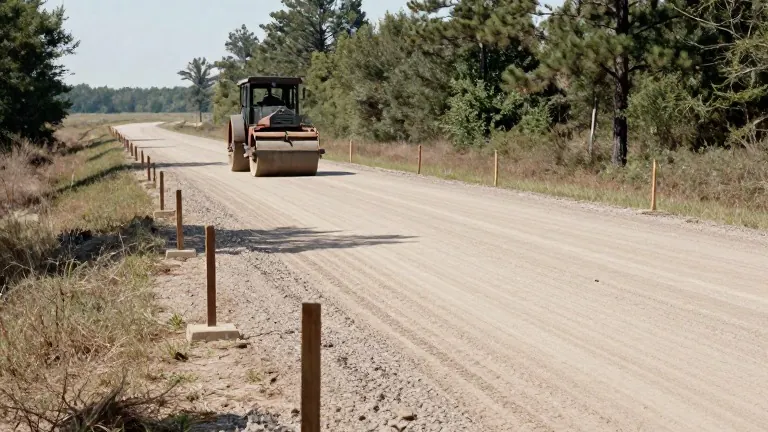
Cobb County began constructing its portion of the future Veterans Memorial Highway in the late 1910s. This road, then known as the Bankhead Highway, was designed to connect Atlanta and Memphis via Birmingham. Local officials moved quickly to secure their section of the route during a period of intense state-wide road building.
The project was part of a larger national movement to improve transportation infrastructure. In the early 20th century, paved roads were rare in the region. Automobile trips were considered difficult expeditions rather than routine commutes. This changed as enthusiasm for highway construction spread across the country.
Two major highway projects ran through Cobb County during this era. The north-south Dixie Highway passed through Smyrna, Marietta, and Acworth. The east-west Bankhead Highway cut through Mableton and Austell. Both roads were frequently mentioned in local newspapers alongside each other during the 1910s and 1920s.
The highway was named after John Hollis Bankhead, an Alabama congressman who later became a senator. He was a prominent advocate for road improvement and the grandfather of actress Tallulah Bankhead. The Georgia Bankhead Association organized the efforts to build the route from Atlanta to Memphis.
By December 1916, preparations were underway for a major conference of association officials in Atlanta. The meeting was scheduled for no later than February 1, 1917. Oscar Mills, chairman of the County Public Works Committee, served as a referee for the Georgia end of the highway. He worked with Dr. T. R. Whitley of Douglasville to oversee the project.
Mills instructed County Engineer Tom Wilson to gather reports from the five Georgia counties involved in the highway. These counties were Fulton, Cobb, Douglas, Carroll, and Haralson. Dr. W. L. Gilbert, a county commissioner, represented Fulton County as vice president. The officials planned to review these reports before the Atlanta conference to determine the next steps for construction.
News that Cobb County had already started work on its section boosted local interest in the project. Construction teams were building a road from the Mayson and Turner bridge at the Chattahoochee River to Austell. The plan called for the road to continue from Austell to Lithia Springs, which marks the border with Douglas County. Fulton County had already finished its portion of the highway, running from the city to the bridge.
With Fulton County completed, only three counties remained to finish the highway within the state. Mills stated that the highway to Memphis was assured. He told reporters that it would be a short time before Atlantans could travel to Birmingham and Memphis over a completed boulevard. The road eventually became known as Veterans Memorial Highway, though it retained its original name for many years.
The Georgia Historic Newspapers archive has made these historical records accessible to the public. The archive is part of the GALILEO project and is housed at the University of Georgia. It contains over two million Georgia newspaper pages from 1763 to 2021. These documents provide a detailed look at the administrative and construction efforts that built the state's early highway network.