Breaking: AI stocks plunge as Democrats vow to slow data center build-out
Wall Street suffered its worst day in months after voters backed candidates promising to restrict artificial intelligence infrastructure.
By Harper Laurent ·
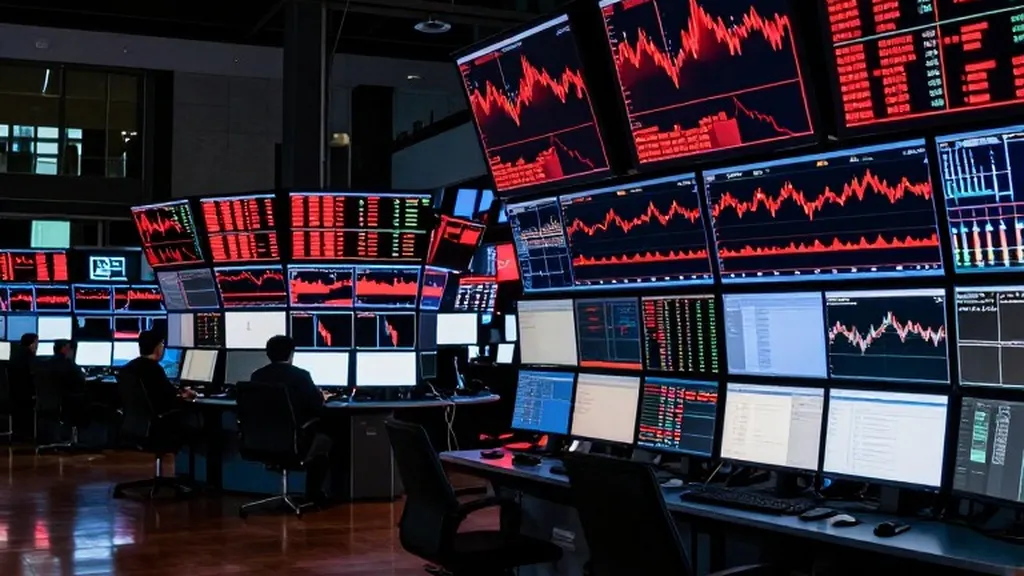
The US stock market crashed on Thursday as investors reacted to the Democratic sweep of Congress and key governor races, a political shift that directly threatens the rapid expansion of artificial intelligence infrastructure. The Dow Jones Industrial Average fell more than 1,800 points, a drop of 3.4 percent, to close at 51,868, erasing the gains made on Wednesday. The S&P 500 declined 4.3 percent, marking its worst day since April 2025, while the Nasdaq Composite tumbled 5.5 percent, its steepest fall in 18 months. This sharp reversal followed a record-setting rally on Wednesday, highlighting how quickly sentiment can shift when political outcomes challenge market assumptions.
The primary catalyst for the sell-off was the Democratic victory in the midterm elections, specifically their control of both the House and the Senate. During the campaign, Democrats ran on a platform that emphasized slowing the spread of data centers and regulating artificial intelligence. Ballots across the country featured dozens of measures aimed at restricting data center development, and voters rejected these facilities in a series of local votes. This broad political mandate signals a potential change in the regulatory environment that has allowed tech giants to build out their infrastructure with minimal friction.
In Texas, a state with a large concentration of planned data centers, Democrat Gina Hinojosa won the governor's race after campaigning on an immediate moratorium on new data center construction. Her victory, alongside Democratic wins in states like Ohio, heightened concerns that the facilities at the heart of the AI build-out will face new hurdles. Investors are now weighing whether tighter state-level restrictions could slow construction, adding to broader worries that the massive sums being spent on AI may not yield the expected returns.
The selling pressure was concentrated in technology and semiconductor stocks, which had led the market's recent gains. Nvidia, the biggest faller in the Dow, dropped 9.2 percent, losing more than $400 billion in market value. The Philadelphia Semiconductor Index fell more than 12 percent, extending its decline to over 30 percent since the beginning of October. The iShares Semiconductor ETF fell 12 percent, its worst day since the breakout in March 2020. This sector-specific rout underscores the market's fear that the physical infrastructure required for AI growth is now politically contested.
Elon Musk's companies were also hit hard, with Tesla falling nearly 11 percent and SpaceX dropping 8 percent, taking more than $300 billion off the value of his enterprises. Musk had spent nearly $450 million backing Republican campaigns, including at least $45 million in support of Ken Paxton for the Texas Senate seat, a race that the Democrats ultimately won. The losses in these high-profile tech names contributed to an estimated $2.5 trillion in market value being wiped from the Nasdaq Composite.
Market volatility spiked as traders rushed to protect their portfolios. The Cboe Volatility Index, often viewed as a fear gauge, jumped as much as 5.7 points to above 28, its highest reading since March 31, 2026. By midday, nearly 800,000 VIX call options had traded, which is 3.5 times the 30-day average. The 10-year Treasury yield fell to 4.83 percent as investors sought safety in bonds, a classic sign of risk aversion. This flight to quality suggests that investors are not merely taking profits but are actively repositioning for a more uncertain regulatory landscape.
Analysts are divided on the long-term impact, but many agree that the immediate sentiment is negative. Neil Wilson, an investor strategist at Saxo UK, described the situation as a complete capitulation-level event in tech stocks, noting that the fear is a total momentum unwind as Democrats pace the frontier and kibosh data center buildout. Dan Ives, a tech analyst, stated that there is no way to sugarcoat that Democrats taking control, especially over the Senate, will create major hurdles for AI and tech legislation in the Beltway over the next two years. He added that the midterm results are a clear sign the pace of data center build-out will start to slow.
Despite the panic, some strategists see an opportunity for a rebound. Gene Goldman, chief investment officer at Cetera Financial Group, said the sell-off had become exaggerated and predicted a recovery, noting that corrections in a bull market are typically short-lived. Ted Parkhill, founder of Incline Investment Management, observed that the market is moving from the promise of AI to the price of AI, suggesting that while AI is transformative, not every related stock is priced appropriately. Susannah Streeter of Wealth Club noted that fresh panic over the AI trade has hit Wall Street hard, as fears about returns collide with the prospect of a sharp slowdown in construction.
The tech industry itself is responding to the political backlash. Greg Brockman, president and co-founder of OpenAI, said at the WSJ Tech conference that everyone had been surprised by the reaction to data centers and that more work is needed to bring communities on board. He emphasized that you cannot just tweet and say the infrastructure is going to be good, but must be present in those communities. Dina Powell McCormick, president of Meta, agreed that the industry needs to double and triple down on telling the story of AI's benefits.
More Business · Business Complaints · Report a business · Got a Story?