Argentina cuts corporate tax to 15% to court billion-dollar AI data centers
The incentive scheme targets projects over $1 billion and awaits Senate approval as companies seek cheap land and power in Patagonia.
By Sarah Montgomery ·
Argentina is proposing to cut its corporate income tax rate from 25% to 15% for data center projects valued at least $1 billion, a measure currently awaiting Senate approval. President Javier Milei introduced the incentive to attract foreign capital for artificial intelligence infrastructure in a country facing chronic economic instability. The plan targets emerging industries but explicitly includes AI facilities.
Milei has told the U.S. Chamber of Commerce that Argentina will not regulate artificial intelligence, stating, "We are going to leave it free." This hands-off approach contrasts with new regulations in the European Union and various U.S. states. Visitor logs show meetings with Peter Thiel and representatives from OpenAI, Amazon, Google, and Oracle. Crusoe, a developer that helped build OpenAI's Texas campus, sought talks with Argentine energy officials regarding U.S.-backed investments this year.
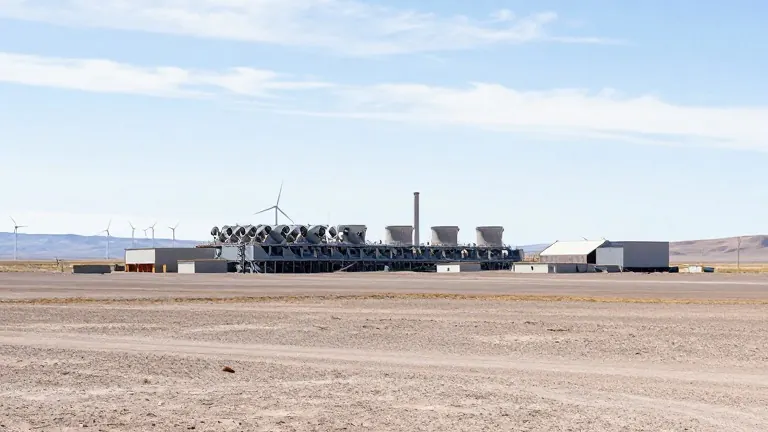
Patagonia offers specific geographic advantages for server farms. The region has open plains, cold climates for cooling, strong winds for power generation, and the Vaca Muerta shale deposit. Marta Zlotkowska of Green Capital said the location outperformed other global options in every category. Her company plans to build a $3 billion facility in Patagonia, though it has not yet secured a customer.
Local energy firms are preparing to supply power. Pampa Energía announced plans to provide gas-fired electricity to a data center near Vaca Muerta. Rubén Etcheverry, an official in Neuquén province, noted that remote locations now attract investors seeking energy and land. The project is expected to draw billions of dollars in investment and create skilled jobs, according to provincial officials.
Critics point out that data centers employ few people and the proposed incentives do not require companies to reserve computing capacity for local use or disclose energy and water consumption. Alan Rocha Varsanyi of Observatorio Petrolero Sur argued that the capacity will be exported to where global tech firms need it. Nicolás Wolovick, a computer science professor at the National University of Córdoba, compared the strategy to testing unregulated drugs in developing countries.
Green Capital expects to generate all electricity for its project from wind, solar, and gas sources rather than using the national grid. The company has leased 130,000 hectares from 14 landowners in Chubut province. Construction is not expected to begin until around 2028. At peak demand, the facility would consume approximately 2.7 times the annual electricity of Buenos Aires in 2025.
Some investors are waiting until after next year's presidential election to commit funds, fearing a change in government could reverse Milei's reforms. In Trelew, residents have formed a group called "Trelew Free of Data Centers" to oppose the projects. Environmental studies are ongoing, and the company has not specified water requirements or the exact share of gas-powered energy.
More Business · Business Complaints · Report a business · Got a Story?