Voyager Griffin-1 Lander Clears JPL Tests for 1,100-Pound Moon Delivery
The spacecraft survived extreme vibration and temperature swings in Southern California, finalizing preparations for a launch to the lunar south pole later this year.
By Sarah Montgomery ·
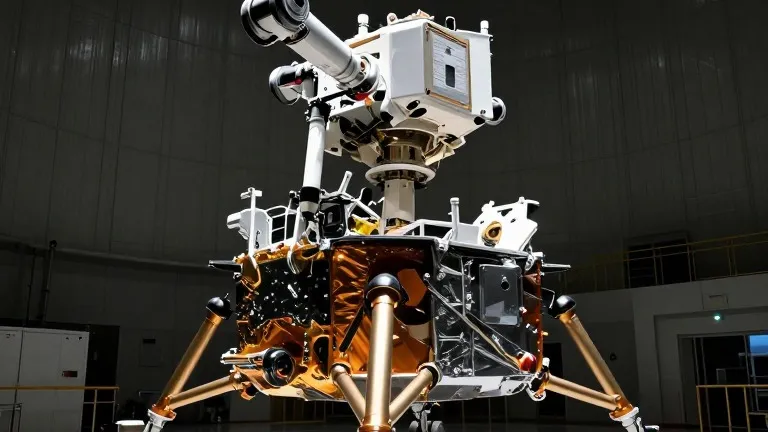
Voyager Technologies has confirmed that its Griffin-1 lunar lander survived a punishing series of ground trials at NASA's Jet Propulsion Laboratory. The spacecraft, which is designed to carry more than 1,100 pounds of cargo, emerged intact from the environmental testing phase in Southern California.
JPL engineers subjected the lander to conditions mimicking the stress of launch and the vacuum of space. The tests included intense vibration, extreme temperature fluctuations, and loud acoustic environments. These trials are standard procedures intended to verify that the vehicle can endure the physical forces of its journey to the moon.
A photograph from August 31 shows the Griffin-1 inside JPL's space simulator, which stands 25 feet wide. Charles Whetsel, manager of the Exploration Systems Development Office at JPL, stated that the lab has supported robotic explorers since the Ranger program of the mid-1960s. He described the work as a way to support the new phase of commercial lunar exploration.
The mission operates under NASA's Commercial Lunar Payload Services initiative. The lander will transport its 455-kilogram payload to a site near the lunar south pole. The cargo includes science experiments and new technologies intended for surface testing.
One of the key payloads is the FLIP rover, built by Astrolab. This vehicle will explore the terrain while carrying a supercomputer designed to process data on the moon. The mission is part of a larger effort to establish infrastructure for a future crewed base in that region of the moon.
Voyager Technologies plans to launch the Griffin-1 later this year. The successful completion of the environmental tests marks the final major technical hurdle before the spacecraft moves to the launch phase.