Ukraine Restores Full Starlink Speeds Amid Ongoing Dispute With Washington
Kyiv confirms the return of high-speed satellite internet for military drones after a week of connectivity limits that fueled diplomatic tension.
By Harper Laurent ·
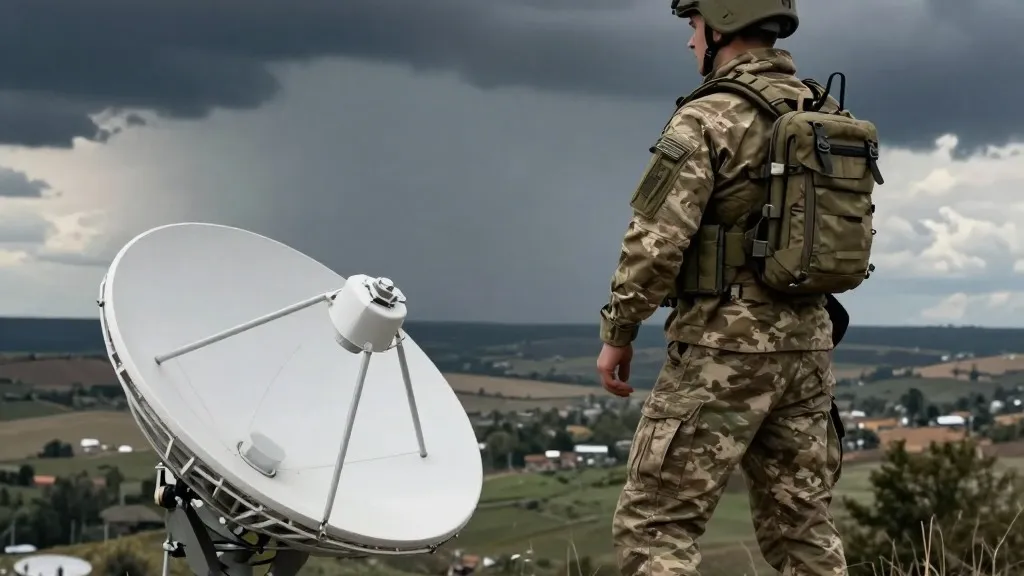
The critical satellite internet link that underpins Ukraine's modern military operations has returned to full capacity, resolving a technical standoff that lasted several days. Defence Minister Yevhenii Khmara confirmed on Saturday that the network is stable again, ending a period of restricted connectivity that forced the military to adapt its tactics. This restoration marks a significant moment in the ongoing friction between Kyiv and Washington over the use of space-based technology in the war.
The primary indicator of the fix is the recovery of data transmission speeds. Khmara stated that connections can now handle speeds exceeding 400km/h, a threshold that signals the full capability of the system has been reinstated. He emphasized that this technical improvement is vital for the front line, specifically for the operation of drones, logistics, and general communications. Before the fix, drones reportedly lost their connection when traveling at 161km/h or faster, a limitation that directly impacted combat effectiveness.
The dispute originated from accusations that US President Donald Trump instructed Elon Musk to impose these limits. Although Trump initially denied giving such an order, he later acknowledged that Musk had corrected the situation. Kyiv relies heavily on Starlink and its military-grade counterpart, Starshield, to pilot drones and manage operations across the battlefield. Musk has indicated that Starshield is controlled by the US military, suggesting the Pentagon may have been involved in the recent connectivity issues.
This technical conflict emerged within a broader diplomatic rift between Trump and Ukrainian President Volodymyr Zelensky. The tension centers on Ukrainian strikes against Russian oil infrastructure, a topic that has become politically sensitive in the US ahead of next month's midterm elections. Trump recently waived some sanctions on Russia and agreed to import Russian diesel for the US market, a move criticized by Ukraine and its European allies. While Trump argues that Ukrainian strikes have pushed global fuel prices higher, Kyiv maintains that these attacks are essential for cutting Moscow's main revenue source for the war effort.
Zelensky also claimed that the US threatened to withdraw intelligence sharing if the strikes did not stop, a claim Trump denied. The dispute highlights the complex interplay between commercial space technology, national security, and diplomatic leverage. As fighting continues, the reliability of this infrastructure remains a key factor in the tactical balance on the ground.
On the battlefield, Russia's defence ministry reported on Saturday that its air defences shot down 616 Ukrainian fixed-wing drones. These drones struck several regions, including Russian-annexed Crimea, where local authorities reported power cuts and restricted electricity and water services following the attacks. In response, Ukrainian authorities said they targeted a missile component manufacturer, a chemical plant, and an aircraft at a military airfield inside Russia in the past 24 hours. They also detailed Russian actions from Friday, noting 88 air strikes that utilized 309 glide bombs and 10,270 kamikaze drones.
More Business · World news · Business Complaints · Report a business · Got a Story?