Ukraine Faces Winter Shortage of Window Installers
A lack of skilled labor has caused installation costs to double, leaving thousands of damaged homes exposed to freezing temperatures.
By Sarah Montgomery ·
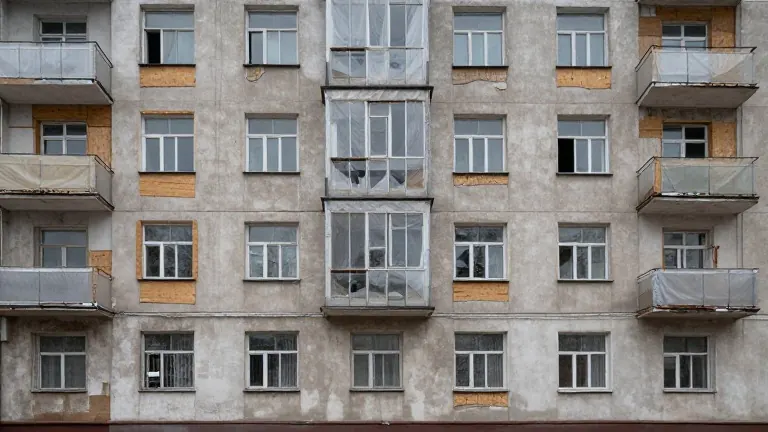
Ukraine is entering winter with a critical shortage of skilled workers capable of replacing broken windows, leaving many residents vulnerable to the cold. While factories can produce new glass units in about ten working days, the lack of available installers has created a bottleneck that delays repairs by months.
In Kyiv, temperatures dropped to minus 20 degrees Celsius during the previous winter. With Russian missile and drone attacks continuing to damage buildings, the need for rapid repairs has intensified. Government assistance for housing damage can take three to four months to arrive, forcing many families to cover shattered windows with fiberboard or tarps in the interim.
Oleksandra Horban lives in a Soviet-era ground-level apartment block in the capital. In October, a missile blast shattered hundreds of facade windows near her home. She reports that microscopic pieces of glass continue to appear in her apartment weeks after the strike. Her family vacuums the floors repeatedly but still finds shards in beds and toys. The cost to replace the windows in her apartment is approximately $1,700, which is more than three times the country's average salary.
Mykhailo Orlenko, executive director of the Association of Ukrainian Manufacturers of Transparent Structures, stated that the industry lost a large number of specialists because businesses could not exempt their employees from military service. This labor drain has caused installation bills to at least double over the past year. The shortage hits low-income districts near industrial zones the hardest, where residents often lack the funds to wait for official compensation.
Oleksandr, a 42-year-old installer with 25 years of experience, described the physical demands of the work. Power outages force his team to rely on battery-powered tools. When elevators are not functioning, workers must carry heavy materials up stairwells. On a recent job involving a fourth-floor apartment, his team made 18 trips up and down the stairs to install balcony doors and windows. He noted that they did not wait for power to return before beginning the work.
To address the labor gap, a vocational college in Kyiv opened a European Union-funded facility in March. The program trains 26 tenth-graders in a three-year course to become window, door, and facade installers. Students practice on mock openings built from brick, cinder block, and wood. Their classes are frequently interrupted by missile and drone alerts. Orlenko said the program was established after associations lobbied the government to formally recognize window installation as a profession, granting the industry access to grants.
Graduates of the training program can expect starting salaries of around $900. Orlenko noted this wage is on par with law graduates, reflecting Ukraine's acute skill drain. Instructor Volodymyr Tserbii stated that the apprentices aim to help rebuild the country by entering a profession essential for reconstruction.
Government planners estimate that repairing Ukraine's damaged homes, schools, roads, and power plants will take at least a decade. The World Bank has estimated that 3 million housing units were destroyed or badly damaged by the end of last year, adding $90 billion to the country's reconstruction needs.
For Horban, the window repair is one of several ongoing issues. Her apartment has no gas, and the family cooks on a portable cylinder. A leaking kitchen roof has added to the structural damage. Her two-year-old son, Viacheslav, waves to passersby from a surviving windowpane. He asks his mother if more bombing is coming, using the phrase "bam bam" to describe explosions. Horban answered him, "No bam bam," and described their situation as surviving rather than living.