Satellite Data Reveals Massive Poppy Expansion in Pakistan Borderlands
Over 9,000 hectares of new cultivation detected in Balochistan as Afghan farmers cross the border.
By Sarah Montgomery ·
Afghanistan’s historic role as the world’s leading opium producer is eroding, yet the drug is not disappearing. It is moving. Satellite imagery and farmer interviews confirm a steep rise in poppy cultivation in Pakistan’s southwestern province of Balochistan and Iran’s southeastern province of Sistan-Baluchistan. This shift places the remote tri-border area at the center of global opium supply.
David Mansfield, a UK-based expert and author of A State Built On Sand, attributes this expansion to the Taliban’s 2022 narcotics ban and growing instability. Mansfield, who wrote an August report for the British satellite firm Alcis, stated that the ban created conditions for widespread growth across the border. He described the resulting region as a global center for opium production. Experts warn that cultivation could climb further in 2027, potentially boosting heroin supplies and funding armed groups.
Balochistan, Pakistan’s largest and poorest province, hosts the bulk of this new growth. Alcis analysis identified more than 9,000 hectares of poppy fields in the province, concentrated in the districts of Loralai and Killa Abdullah. Abdul Qahar Wadan, a former National Assembly member from Killa Abdullah, claimed cultivation is rampant and backed by senior military officials and pro-government power brokers who take commissions. Monawar Hussain, the district’s chief administrative officer, rejected this view, citing a decline after last year’s eradication campaign. However, 2026 imagery shows no clear evidence of such removal.
Local drivers include drought, flash floods, and insecurity that have devastated traditional fruit farming. Lala Jan Kakar, a resident of Killa Abdullah, noted that poppy demand and income far exceed those of fruit. An anonymous Killa Abdullah farmer alleged that growers pay bribes through intermediaries and sometimes plant poppies on barren land to simulate eradication efforts when media pressure increases.
The expansion is fueled by Afghan farmers from Kandahar and Helmand crossing the border to lease land. Kakar observed that these growers invest millions of Pakistani rupees in solar-powered wells and share profits with local landowners. Poppies can be harvested twice yearly, and many farmers doubled their cultivated land in 2026. Mansfield called this a stark indication that higher cultivation levels are likely in 2027. A similar pattern exists in Iran, where Afghan tenants use drip irrigation, a costly investment suggesting low risk of eradication.
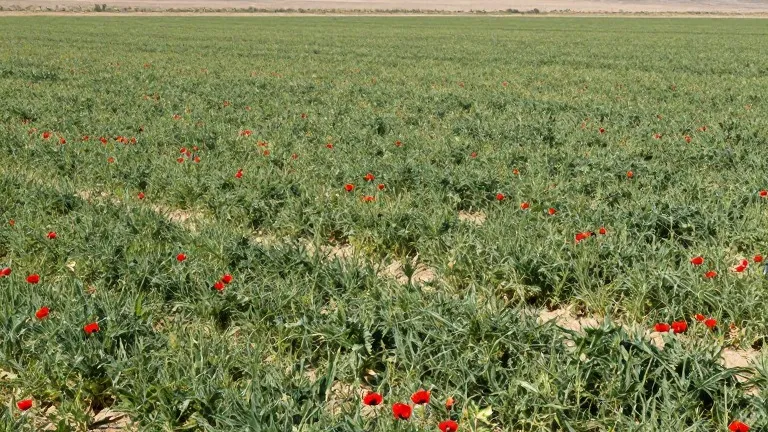
Inside Afghanistan, production is rebounding despite the ban. Badakhshan Province in the northeast accounts for roughly half of national output. Southwestern cultivation almost doubled between 2025 and 2026, though crops remain concealed within wheat fields and behind compound walls. Mansfield warned that a Taliban directive barring home searches without a court order may be interpreted as tolerance for cultivation beyond walled compounds. If farmers read this signal correctly, Afghanistan could see a dramatic rise in opium production in 2027 as armed groups compete for tax revenues from the trade.