Philip Slein Gallery uses all rooms to honor late Edward E. Boccia
A career retrospective opens Oct. 23 with more than 30 works, filling all three rooms of Philip Slein Gallery for the first time in 23 years.
By Malik Salazar ·
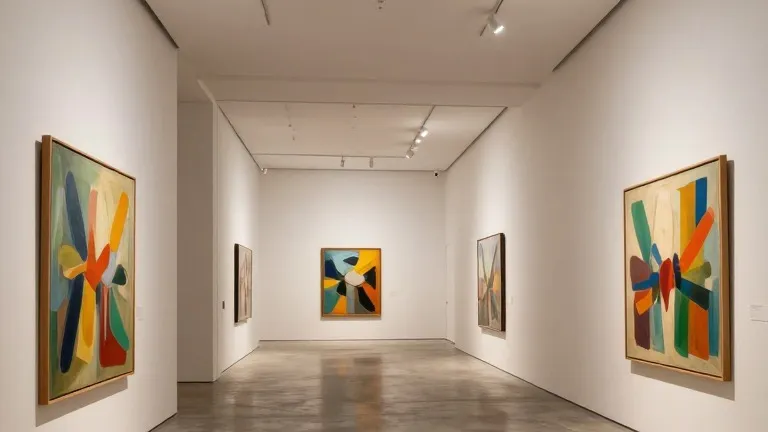
Philip Slein Gallery has filled every room in its 23-year history for the first time. The decision marks a rare shift in how the Central West End space operates.
The exhibition, titled "Edward E. Boccia: An American Modernist," opens with a reception from 5 to 8 p.m. on October 23. It runs through December 19 at 4735 McPherson Avenue.
Gallery owner Philip Slein said the scale of the show is unprecedented for the venue. "The only thing that could be bigger than this would be at an institution," he noted.
Boccia lived in St. Louis for 60 years. Born in New Jersey in 1921, he served in the World War II Ghost Army before studying at Pratt Institute and the Art Students League in New York.
He joined Washington University in 1951 and taught there for 30 years. He retired in 1986 as a professor emeritus. Curator Rosa Berland described his teaching style as rigorous but open to student individuality.
The show features more than 30 paintings from a career that produced thousands of works. The front room displays large-scale pieces, including the nine-panel polyptych "Eugene's Journey" and the 2004 triptych "David's Death."
A hallway displays mythic ocean scenes with figures that appear to glow from within. The final room features a salon wall that traces his evolution from a 1950s portrait to a 2012 work. Influences from Cézanne, Picasso, Magritte, and Max Beckmann appear throughout the collection.
A companion book, "Edward E. Boccia: Painter of Nightmares and Dreams," will be published by Hirmer during the run. Written by Berland after 14 years of research, it is the first major monograph on the artist. It includes fold-out plates to show the scale of his multi-panel works.
Boccia died in 2012 at age 91. Slein recalled that the painter was always drawing when not sleeping or eating. Berland credited Morton D. May as Boccia's greatest patron and called him a polymath who studied philosophy, theology, and psychoanalysis.
A pamphlet for the show includes Boccia's instruction to viewers: "Don't worry about what my art means. Just experience it." Berland said the work matters now because it demands engagement on several levels, comparing the experience to reading a poem or a philosophical text.
More Culture · St. Louis news · Report a business · Got a Story?