Breaking: Warm October and Maintenance Outages Strain PJM Grid Capacity
Unseasonable heat collided with 70,000 megawatts of scheduled maintenance, prompting the first Capacity Advisory in PJM history.
By Malik Salazar ·
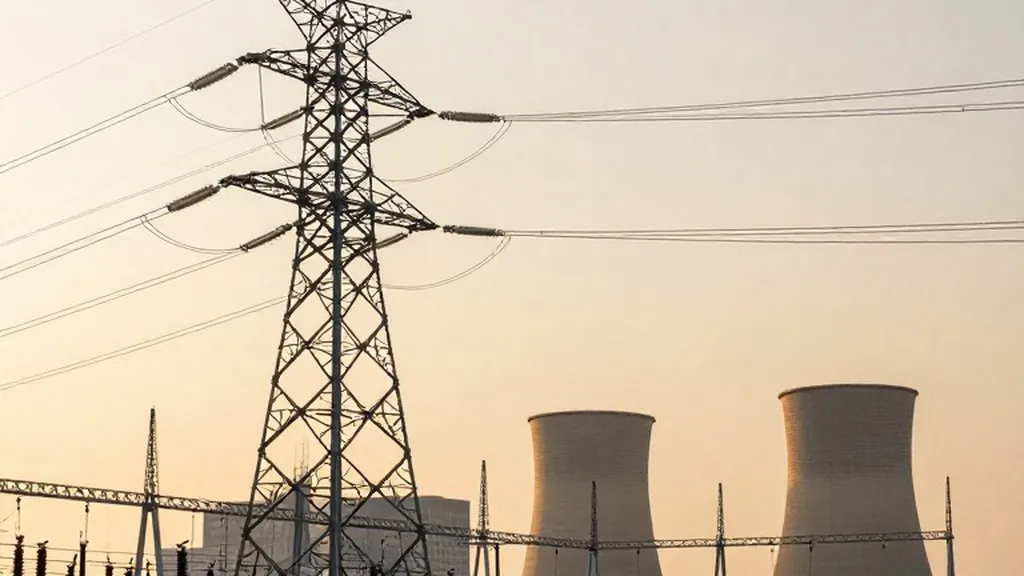
The U.S. Department of Energy declared a power grid emergency for the PJM Interconnection region on October 12, 2026, granting temporary authority to manage stability through October 16. Energy Secretary Chris Wright issued the order under section 202(c) of the Federal Power Act to prevent interruptions across thirteen states and the District of Columbia. The primary driver was a collision between unusually warm October weather and the fall shoulder season, a period when generator and transmission owners typically take equipment offline for maintenance and upgrades ahead of winter.
PJM forecast peak demand of approximately 111,500 megawatts for the period, a figure that strained the system against about 70,000 megawatts of previously scheduled generation outages and planned transmission work. This volume of outages is typical for the shoulder season, as most scheduled maintenance is prohibited during the summer peak which ended in mid-September. However, the warm weather pushed demand higher than expected, creating a tight balance between available supply and required load.
In response to the approaching shortfall, PJM issued a Capacity Advisory on October 9 for the days of October 12 and 13. This marked the first time PJM had used that specific procedure, a tool members endorsed in June 2026 for circumstances where projected conditions indicate an impending capacity deficit. The advisory followed an earlier forecast of about 102,000 megawatts of peak demand on October 12 and about 104,000 megawatts on October 13. Paul Dajewski, PJM’s senior manager for dispatch, noted to stakeholders that while the outage volume was standard for the season, the weather conditions made the situation critical.
On October 12, PJM escalated its response by issuing a Maximum Generation Alert and a Load Management Alert for October 13, extending the Capacity Advisory through October 14, and issuing a Maintenance Outage Recall. The Maximum Generation Alert informed transmission and generation owners that conditions would be tight, prompting them to defer or cancel equipment maintenance and testing. It also signaled to neighboring grid operators that exports from PJM might be curtailed to preserve internal stability.
The Department of Energy order allowed PJM to direct generators to run in excess of their operating permits and to call on data centers and other large electricity users to switch to backup generation if necessary. Federal officials stated that PJM sought to deploy auxiliary, standby, directly connected, or battery storage resources at data centers, including hyperscaler facilities, and other large industrial sites. This authority was designed to prevent interruptions rather than announce scheduled blackouts, ensuring that daily electricity use for households remained normal without requiring specific customer action.
Transmission constraints further complicated the situation by limiting how much electricity could move between zones. Generation was effectively bottled in certain areas, particularly those serving congested zones in Washington D.C., Maryland, and Virginia, which include the BGE, Pepco, and Dominion zones. These physical limits meant that even when power was available in other parts of the grid, it could not always be moved efficiently to where the demand was highest. The alerts required no action from general customers, but they signaled to large load owners and generators that the system was operating at its limits.
PJM has faced similar challenges recently, using Department of Energy emergency orders during two unseasonably warm periods in September, specifically from August 31 to September 4 and September 15 to 18. During those times, PJM deployed Demand Response programs, which pay customers who sign up in advance to cut electricity use when the grid is stressed. The organization noted that after sunset on those days, it had to cover net load as solar output fell faster than electricity use, adding another layer of complexity to grid management.
The situation highlights a shifting reality for the grid, where PJM states that the shoulder-season reprieve is not what it used to be. Most of the new, rapidly growing demand comes from data centers and other energy-intensive large-load customers whose consumption does not fall with the weather, operating as a twelve-month, twenty-four-hour phenomenon. This expanding demand is outpacing new transmission and electricity supply, meaning that unseasonably hot or cold weather now poses risks outside the traditional peak seasons. The emergency order stood as a precautionary measure, with no blackouts occurring and no mandatory conservation orders issued for the general public during the October 13 to 16 window.