69-year-old marsh activist returns after 14 days of torture and forced confession demands
Jassim al-Asadi, co-founder of Nature Iraq, was kidnapped by an Iran-backed militia in 2023 but refused to leave the wetlands he has protected for decades.
By Sarah Montgomery ·
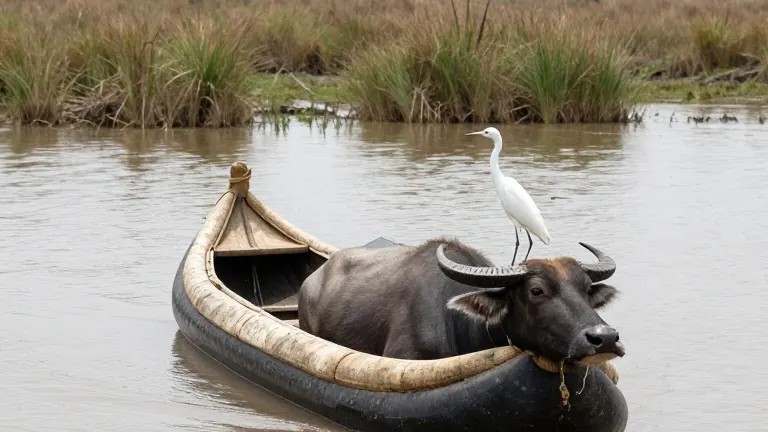
Jassim al-Asadi sat in his boat in the central marshes of southern Iraq, pointing at a white egret perched on a water buffalo. He asked his companion if they saw the bird, a gesture of excitement that belies his recent past. Asadi, 69, was kidnapped in February 2023 by an Iran-backed militia that accused him of being an Israeli spy. He was held for two weeks, tortured, and forced to write a will before being released.
The kidnappers blindfolded Asadi and drove him to a location he believed was farmland. There, they beat him and showed him a map on a screen with lines connecting world capitals to Tel Aviv. They claimed he led a global spy network and was smuggling journalists into Iran. Asadi refused to confess, leading his captors to subject him to waterboarding, electric shocks, and beatings with metal chains.
"When the oxygen ran out I felt like I was going to die," Asadi said. He described the torture sessions where his arms were pulled behind his neck and beaten until he felt like he was being pulled apart. The waiting between sessions, he said, was also a form of torture, as he thought about his family and his fate.
Asadi used poetry to survive. He recited memorized verses from Arab poets to himself, including a poem by Saadi Youssef from Basra. The poem, which references a prisoner and a wife, served as a mantra to keep him focused away from the pain. After two weeks, his captors gave him an hour to sign a confession or write a will. Asadi chose to write a will, stating his love for Iraq and his hope for the country's independence.
He was dropped on a road in Baghdad near his family. Despite his injuries, he returned to his hometown of Chibayish the next day. Hundreds of marsh residents walked miles to welcome him back, waving flags and posters. Alwash, Asadi's co-founder at Nature Iraq, said the militia was identified quickly because Asadi's cousin, who was driving, memorized the license plate of the kidnappers' vehicle.
The Iraqi government pledged to secure Asadi's release, but local militias often hold more power than state forces. In the end, it was the Bani Asad tribe that won his freedom. Alwash said four hundred armed tribal fighters surrounded the house of the militia leader, demanding Asadi's release or a life for a life. As part of the deal, Asadi agreed not to pursue the case in court.
Asadi was offered asylum in Europe but refused, believing his captors wanted him to leave Iraq and stop his work. He instead requested asylum for two of his children, who now live in Sweden. His third child lives in the United States. Alwash said intelligence services from three countries warned him that he, too, was at risk of being kidnapped. He has not returned to Iraq since the incident.
Iran's suspicions of Nature Iraq date back to 2016, when the group began a project with Iranian conservationists on the Persian Leopard. Two years later, Iran arrested nine Iranian conservationists linked to the project, accusing them of espionage. One died in detention. Alwash said Iran operates on the theory that Nature Iraq is a Mossad operation and cannot understand why Western governments fund environmental work.
Asadi is now back in the marshes, monitoring water levels and talking to fishermen. Five years of drought had dried out parts of the wetlands, killing buffalo and stunting reeds. Residents are now returning with their herds to the floating islands where life in the marshes has remained largely unchanged for thousands of years. Asadi continues his work from his office in Chibayish, on the edge of the central marshes.