Lincoln made Thanksgiving a national holiday to unite a divided country
Sarah Josepha Hale pushed five presidents for the holiday, which schools later used to assimilate immigrants into American culture.
By Malik Salazar ·
President Abraham Lincoln declared Thanksgiving a national holiday during the Civil War to help bind a fractured nation together. He acted on the repeated petitions of Sarah Josepha Hale, who had spent decades campaigning for a unified day of gratitude. Lincoln hoped that emphasizing the country's origin story would serve a unifying purpose while the war raged.
Hale, born in New Hampshire in 1788, edited Godey’s Lady’s Book in the 1830s. The magazine had the largest circulation in the United States before the Civil War. She used its pages to publish editorials calling for a national Thanksgiving and provided specific instructions on how to observe it. Her vision focused on the domestic sphere, positioning women as central to the nation's moral identity.
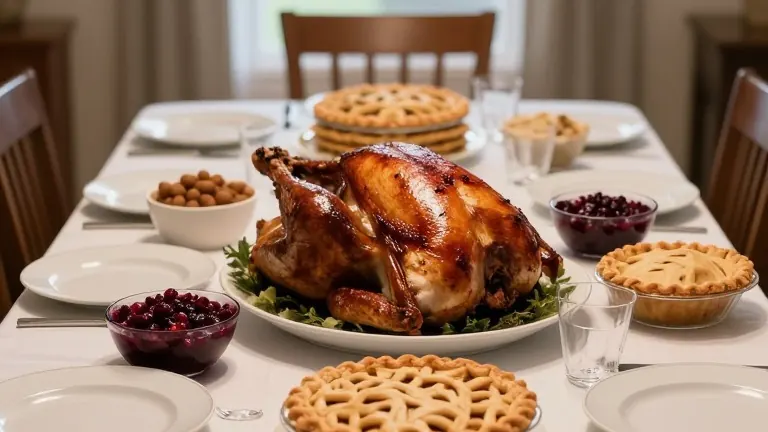
The magazine taught readers to prepare specific foods, including turkey and cranberry sauce. Pies served as the centerpiece of the table, often decorated with pastry crusts shaped like the Mayflower or a cornucopia. These elaborate displays celebrated domestic labor at a time when the Industrial Revolution was shifting the economy toward factories. Hale also promoted the holiday as a time for family reunification and storytelling.
Adoption of the holiday was uneven across the country. Catholics, who had different feast and fast traditions, embraced it slowly. The South, associating the holiday with Lincoln and the war, also took longer to participate. The frontier, dominated by single men, celebrated it less frequently than settled communities. Despite these delays, Godey’s Lady’s Book continued to instruct Americans on proper observance, linking the menu to the Pilgrims' courage during a period of rapid change.
The holiday became a tool for assimilating new immigrants. In 1869, political cartoonist Thomas Nast published an image in Harper’s Weekly depicting diverse groups sitting together at a table while Uncle Sam carved a turkey. This illustration appeared one year after the 14th Amendment granted citizenship to those born in the U.S. and four years after the 13th Amendment ended slavery. The image suggested that immigrants and formerly enslaved people could be incorporated into the national family.
Public schools reinforced this narrative in the early 20th century. Teachers sent children home with recipe cards to ensure families cooked the same dishes Hale had popularized. Schools framed the Pilgrims as the spiritual ancestors of all Americans, describing them as the first immigrants. By the 1920s, Thanksgiving was the most celebrated holiday in public schools. Students acted out the first Thanksgiving and were told they belonged to a nation of immigrants.
Immigrant families adapted the holiday to fit their own traditions. Jewish families used Crisco, a nondairy butter substitute invented in the early 1900s, to create kosher-friendly desserts. Some families combined traditional American dishes with their own cultural foods, such as serving matzah ball soup as an opening course. This flexibility allowed newcomers to participate in the national culture while maintaining their own distinct identities.