Airwayz Integrates 45 Sensors in NATO Exercise to Tame Low-Altitude Chaos
The Israeli security firm argues that coordinating existing counter-drone systems is now more critical than buying new hardware as commercial drones proliferate.
By Sarah Montgomery ·
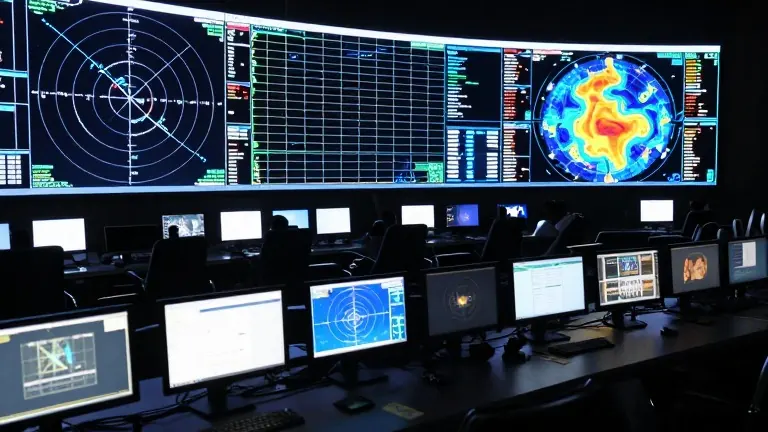
Airwayz, an Israeli security technology company, demonstrated its OVERWATCH command-and-control platform during a recent NATO exercise. The system successfully integrated more than 45 sensors, effectors, and command systems from various manufacturers. The exercise aimed to solve the interoperability problems that arise when different nations field incompatible counter-drone equipment.
Brig.-Gen. Yaron Rosen serves as executive chairman of Airwayz. He previously held senior leadership roles in the Israeli Air Force and the IDF’s Cyber Command. Rosen describes the current security environment as a direct parallel to the early days of cybersecurity. He states that the barrier to entry for airborne threats has collapsed.
“It’s the democratization and commoditization of airspace,” Rosen said. “Anyone can fly an object, like drones, and that wasn't possible 10 years ago.” He noted that commercial technology allows individuals, criminal groups, and state actors to access capabilities that once required massive state budgets.
Rosen observes that flying objects are shrinking and becoming more aggressive. “We have been used to building aircraft that carry people and are relatively big,” he said. “If you look over the past five years, these flying objects are getting smaller. And meaner.” He draws a direct line between this trend and the rise of distributed cyberattacks.
“Airspace and cyber have parallels,” Rosen said. “In cyber, smaller, faster and more distributed capabilities changed the nature of both offense and defense. We're beginning to see similar dynamics in airspace.” This shift means security is no longer limited to land and sea borders. It now includes the sky above critical infrastructure.
The platform focuses on data fusion rather than hardware manufacturing. OVERWATCH combines data from radars, cameras, and radio-frequency sensors into a single operational picture. The software is designed for military and civilian users, including police and infrastructure operators who may lack specialist airspace personnel. It learns normal patterns, such as bird migration, to flag deviations.
Rosen emphasized that buying more sensors is insufficient without coordination. “You can arm yourself with sensors and effectors, but you need to make sense of the information you get,” he said. The system also incorporates legal frameworks and rules of engagement to guide operator decisions.
Airwayz has deployed its technology at the Port of Rotterdam and secured airspace over recent FIFA matches. During the NATO exercise, the company achieved SAPIENT compliance, an interoperability standard that facilitates communication between different systems. The demonstration highlighted the difficulty of integrating equipment built by different countries.
Rosen reported that military officials provided feedback during the exercise. “During the exercise, we got some feedback from generals who were there. They came back the next day and saw the issues they raised were fixed, something they never saw with other integrators,” he said. The rapid turnaround was intended to prove the platform's adaptability.
European governments are increasingly recognizing the drone threat, though urgency varies by country. Rosen noted that Israel’s experience drives innovation in the sector. “Israeli companies shine. Necessity is the mother of all inventions,” he said. He added that eastern European nations are feeling the pressure most acutely as they prepare for potential aerial incursions.