Macy's Parade Moves to Saturday as East Coast Storms Deliver 60 mph Gusts
The 100th annual procession was delayed for the first time due to severe weather, while a federal judge also blocked an administration review of ABC's broadcast licenses.
By Sarah Montgomery ·
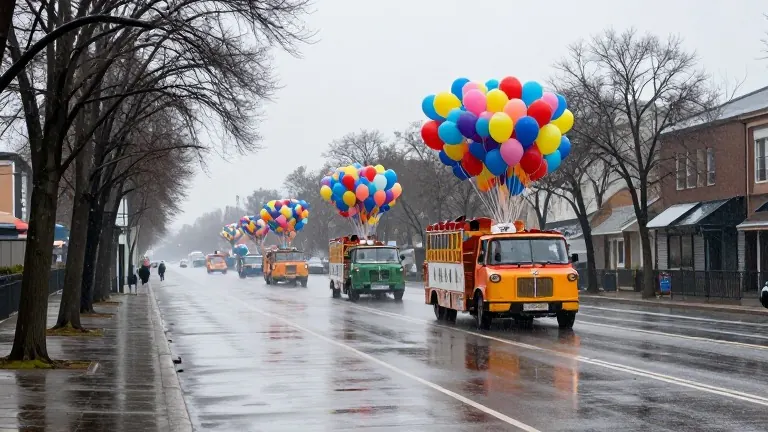
New York City officials rescheduled the Macy's Thanksgiving Day Parade to Saturday after forecasters warned of wind gusts reaching 60 mph. The change marks the first postponement in the event's 100-year history. The decision comes as severe weather systems disrupt travel across the nation on the fourth Thursday of November.
The East Coast storm is the primary concern, according to Richard Bann, a meteorologist with the National Weather Service Weather Prediction Center. The system will become better organized throughout the day, bringing heavy rain and strong winds that could cause coastal flooding. Forecasters expect the storm to move off the coast by Saturday morning.
In Washington, U.S. District Court Judge Loren AliKhan issued a preliminary injunction blocking the Trump administration from challenging ABC's broadcast licenses. The ruling declared that retaliating against satire and commentary the president dislikes is unconstitutional. The court dismissed the administration's request to dismiss the lawsuit filed by ABC and Disney.
The judge relied heavily on public statements and social media posts made by the president against the networks. The decision also cited comments from Brendan Carr, the president's nominee for Federal Communications Commission chair. Broadcast licenses typically last eight years and are rarely revoked, but the review had drawn attention to the FCC's role in media regulation.
Federal scientists are testing air, soil, and water in Eastern Iowa for lead contamination following a controlled explosion at the Iowa Army Ammunition Plant in Middletown. The U.S. Army detonated thousands of pounds of unstable lead azide yesterday to dispose of the compound. The Environmental Protection Agency has deployed approximately 300 people to sample the area and has not found lead in the air so far.
Residents in the region have grown hesitant about the Army's initial findings after a week and a half of inconsistent communication. The University of Iowa and the University of Illinois are conducting independent regional sampling to verify the EPA's data. Results from those tests are expected in a few days.